Tinea Versicolor
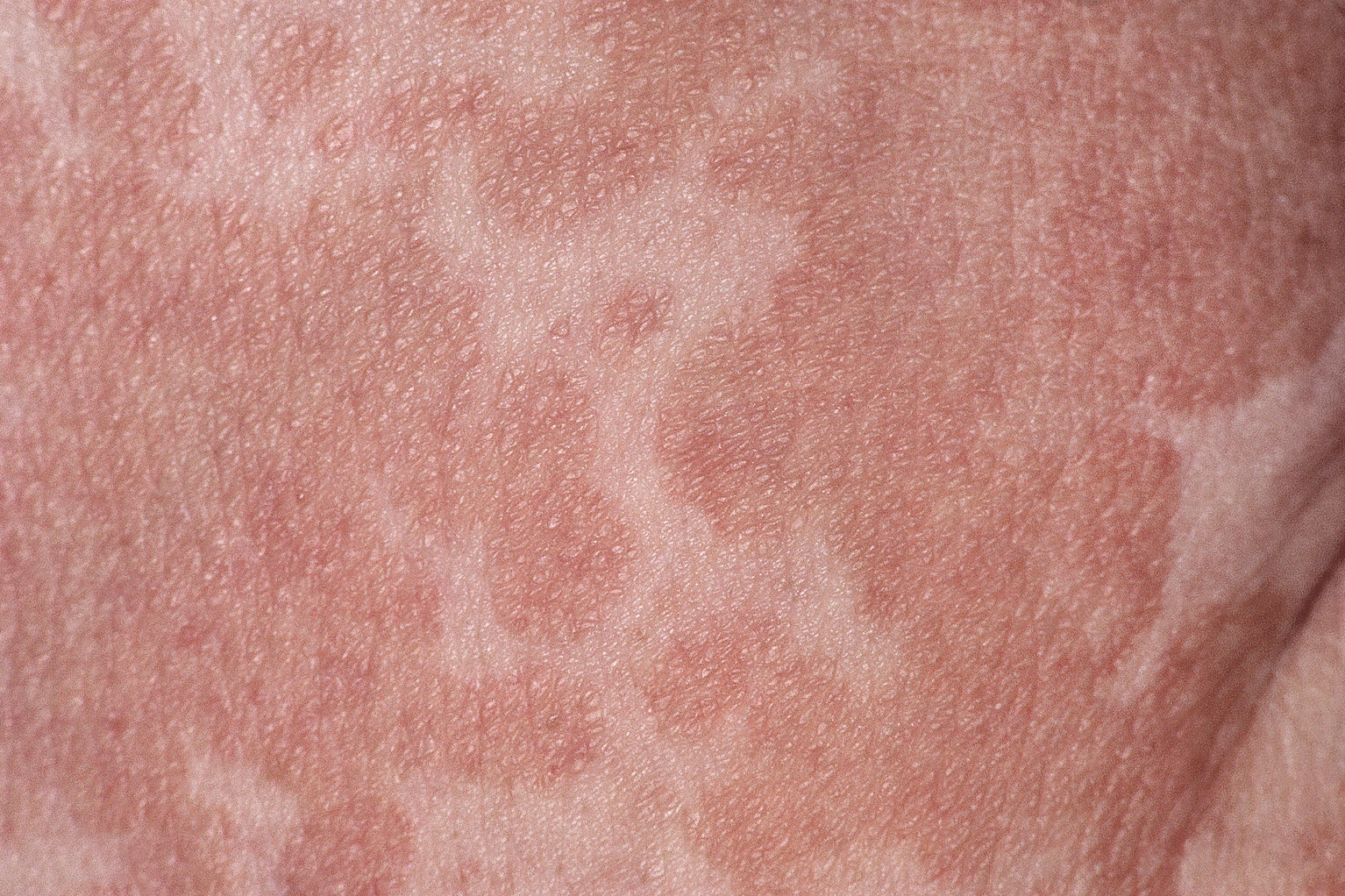
Tinea versicolor (also known as pityriasis or tinea versicolor) is a common but harmless skin condition caused by the Malassezia yeast, which naturally resides on the skin. Due to certain environmental and bodily factors, this microorganism can begin to multiply more actively, leading to the appearance of mottled patches of varying shades, mild flaking, and itching. The condition is not contagious, so close contacts do not get infected even with close contact. It most commonly affects teenagers and young adults but can occur at any age, especially during warmer seasons.
The good news is that tinea versicolor is usually successfully managed with appropriate care and treatment measures. It is important to recognize it in time, distinguish it from other skin conditions, and choose a targeted, safe treatment plan.
What is it?
Tinea versicolor is a superficial fungal skin infection characterized by uneven skin discoloration. The Malassezia yeast is a normal part of the skin microbiota, especially in areas with more sebaceous glands (back, chest, neck, shoulders). When favorable conditions arise (heat, humidity, excessive sweating, oily skin), the fungus overgrows in the upper skin layers. It then releases substances that alter the production and distribution of melanin, the skin pigment. This results in patches that are lighter or darker than the surrounding skin, with fine flaking visible on the surface.
Although the name may sound alarming, this condition does not pose a systemic health threat and is not associated with poor hygiene or "dirty skin." However, it often causes aesthetic discomfort and tends to recur, so it is important to understand what triggers flare-ups and how to prevent them.
Causes and Risk Factors
Several related factors contribute to the development of tinea versicolor:
- Heat and humidity. Hot, humid weather, saunas, pools, and exercising in warm environments create a favorable environment for fungal growth.
- Increased sweating and oily skin. Active sports, intense physical work, and a personal tendency to sweat more.
- Skin covering and friction. Tight synthetic, non-breathable fabrics, heated, damp clothing, backpack straps, and sports gear.
- Hormonal and age characteristics. Adolescence and young adulthood, when sebaceous glands are more active.
- Skin care features. Very greasy creams, oils, or products that cover the skin for a long time and create a "greenhouse" effect.
- Immune system weakening and stress. After illnesses, in chronic conditions, or experiencing prolonged stress.
- Genetic predisposition. Some people inherit a greater tendency for this microbiota imbalance.
Usually, when several factors coincide, such as actively exercising in summer and wearing tight synthetic clothes, the rash becomes more active and spreads.
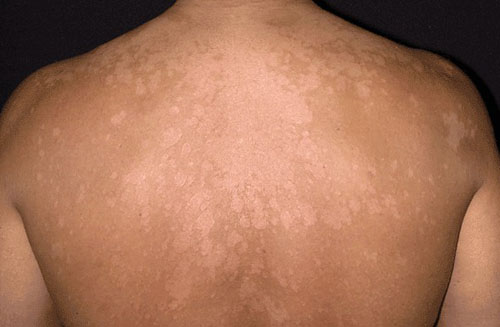
Symptoms
Tinea versicolor has quite recognizable signs:
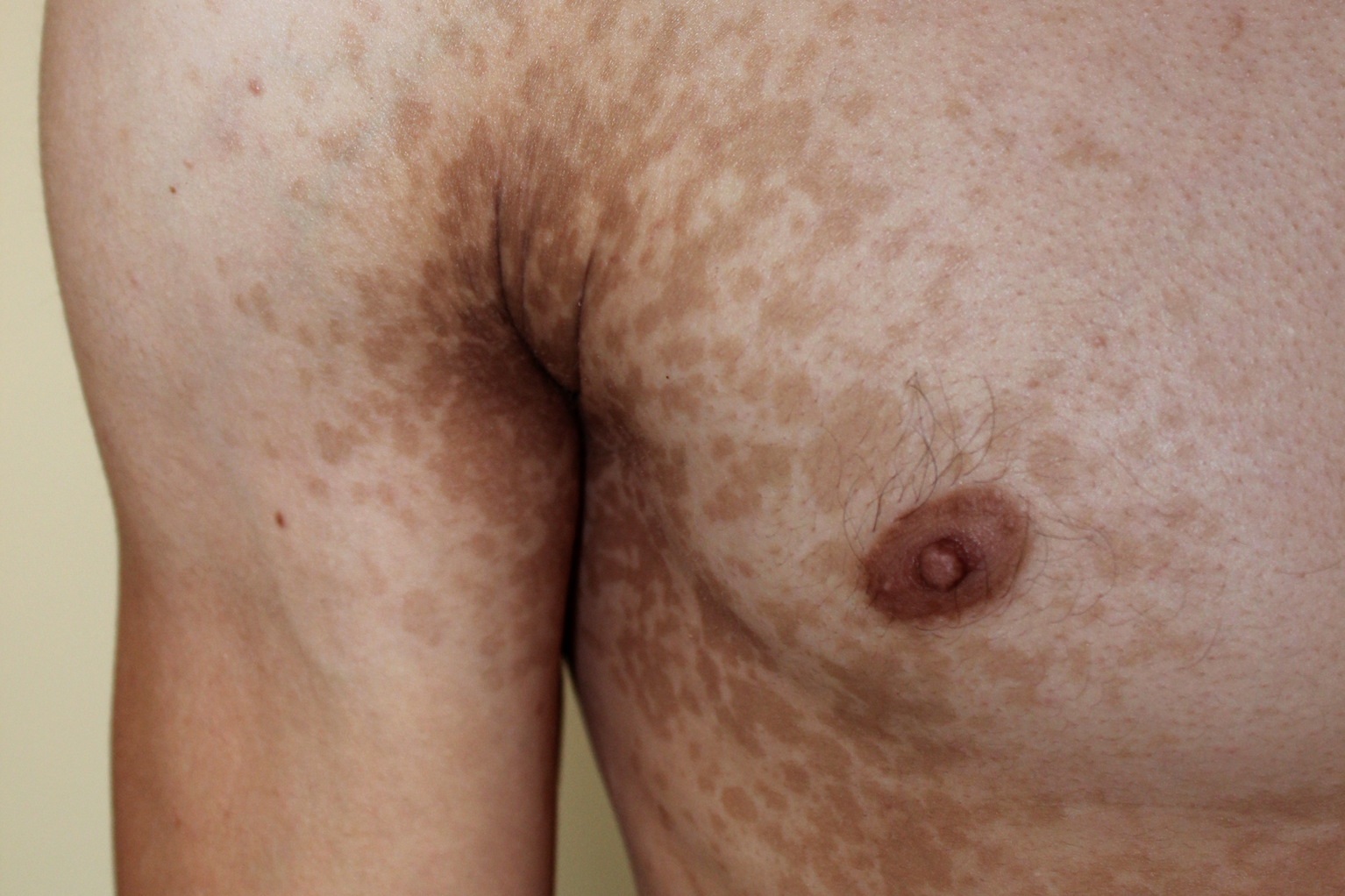
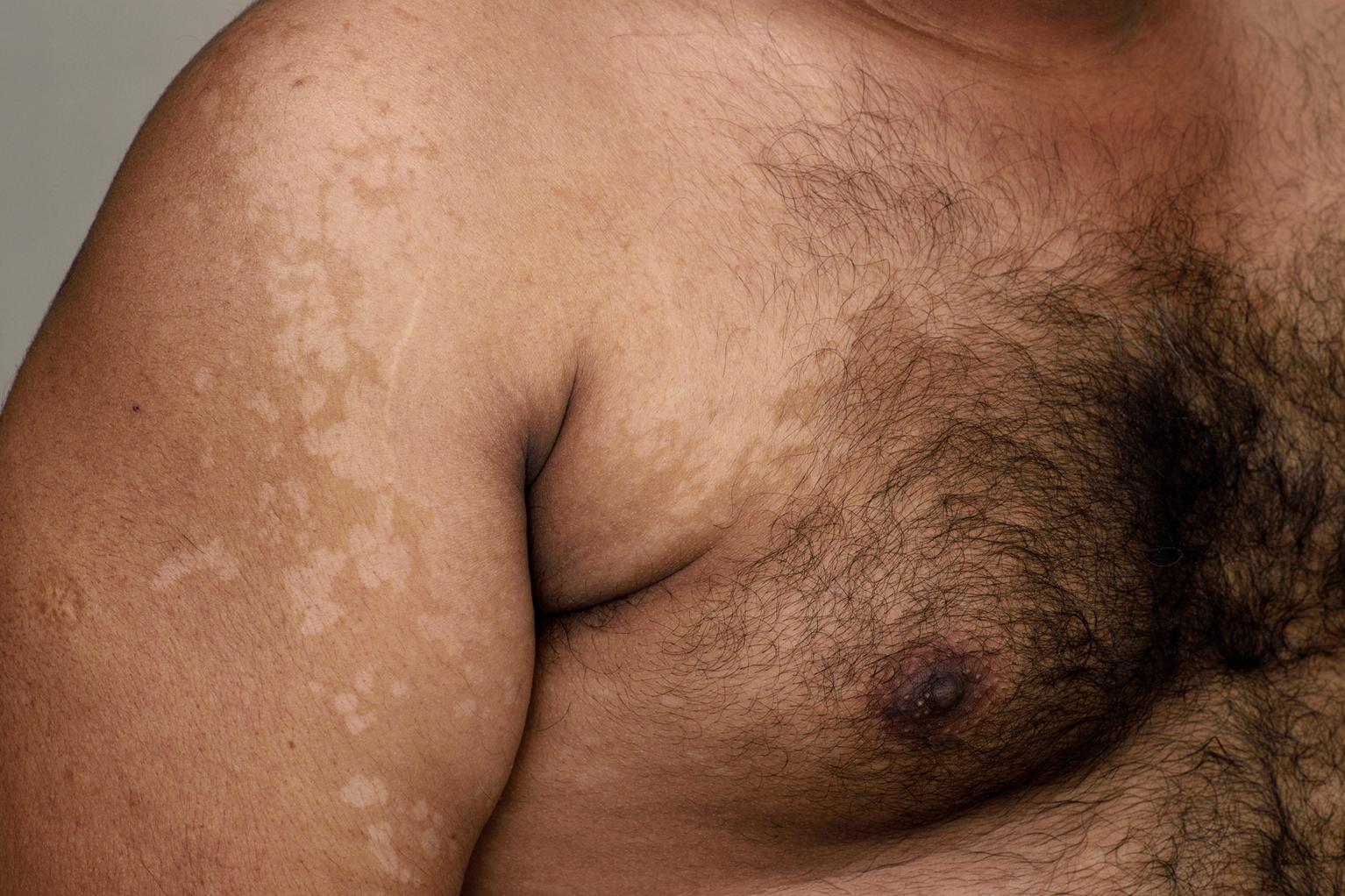
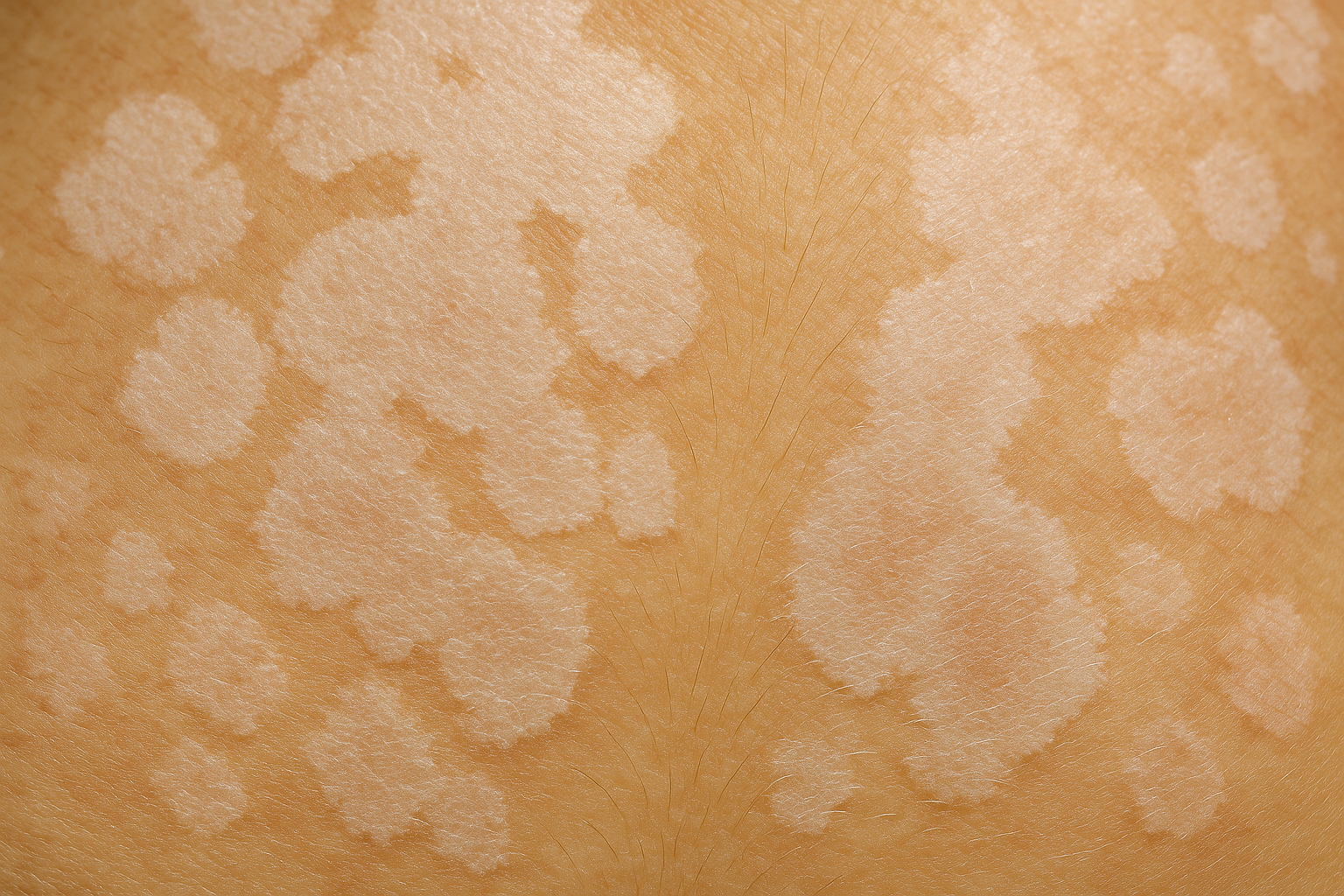
- Mottled patches. Irregularly contoured patches of various colors are visible on the skin: from yellowish-brown, coffee-colored to whitish or even pink. On darker skin, light patches may appear more intense, while on lighter skin, darker patches are more pronounced.
- Fine flaking. When you run your hand over the affected area, especially when stretching the skin, you can see fine flakes, like powdery "dust."
- Itching. Usually mild to moderate, more noticeable when warm, sweating, or after exercise.
- Uneven tanning reaction. In the areas of the patches, the skin tans poorly or unevenly, creating a "mottled skin" effect in the sun.
- Common locations. Back, chest, shoulders, neck, upper arms, less commonly – abdomen, thighs, or face.
Tinea versicolor does not cause fever, general malaise, or pain. The main discomfort is aesthetic and occasionally mild itching.
When to See a Doctor?
Simple, small, and clear cases can sometimes be managed independently, but it is advisable to see a dermatologist if:
- The rashes cover large areas, spread rapidly, or recur several times a year.
- The skin is severely itchy, flaky, with redness, cracks, or discomfort.
- It is unclear whether it is truly tinea versicolor – other conditions (e.g., vitiligo, pityriasis alba, post-inflammatory hypopigmentation) can look similar.
- There is no improvement after self-care, and the patches persist or increase.
- The rashes appear in children, pregnant women, or those with other skin conditions – then a safe, individual approach is needed.
Diagnosis
The diagnosis is usually made based on appearance and typical spread location. During the examination, the doctor assesses the color, borders, and flaking of the patches, often performing a "mechanical flaking" test – gently stretching the skin or scraping to see fine scaling. If needed, additional tests may be performed:
- Wood's lamp. Under ultraviolet light, affected areas may gently fluoresce yellow or golden, helping to see the boundaries of the rashes more clearly.
- Dermatoscopy. Magnification allows for the assessment of surface flaking, follicular foci, and pigment distribution.
- Microscopic examination. A small scraping from the affected area is taken, and fungal structures are sought under a microscope to confirm the diagnosis.
Rarely, in atypical cases or suspecting another disease, additional differential tests are performed. Our iDerma clinic dermatologists help accurately diagnose, assess the severity of the condition, and choose an individual, safe treatment and care plan – both in-person at the clinic and during remote consultations.
ARTICLE_GIF
Treatment
The goal of treatment is to reduce the amount of fungus on the skin surface and restore the normal balance of the skin microbiota. Usually, local treatment is sufficient, but in widespread or constantly recurring cases, a broader plan is needed.
Local care and treatment. Special cleansers, foams, lotions, or gels with antifungal properties are used. It is important to apply the products to all areas prone to rashes (back, chest, shoulders, neck), not just visible patches. A course of treatment is often recommended for several weeks, following the specified application frequency and contact duration with the skin (e.g., apply, leave for a few minutes, and rinse off if instructed by the manufacturer).
Oral medications. If the lesions are very widespread, tend to recur, or local treatment is ineffective, the doctor may prescribe oral treatment. The decision is made individually, considering the patient's age, comorbidities, and potential interactions with other medications.
What to expect during treatment? Even after stopping the fungal overgrowth, the skin color does not immediately return to normal – pigment recovery can take from a few weeks to several months. This does not mean the treatment is ineffective; the skin simply needs time to "even out" the color. It is worth combining the active treatment phase with moderate sun avoidance and photoprotection to visually reduce the contrast of the patches more slowly.
A dermatologist consultation in person or online helps quickly clarify the diagnosis, assess the spread, choose the most appropriate treatment strategy, and plan prevention, especially if the rashes tend to recur.
Care and Prevention
Tinea versicolor tends to recur, so not only appropriate therapy but also daily habits are important:
- Shower after activity. After sports or heavy sweating, shower as soon as possible, dry your skin, and change clothes.
- Breathable fabrics. Choose lightweight, moisture-wicking fabrics (e.g., cotton or functional sports materials), avoid wearing wet clothes for long periods.
- Sensible skin care. Use gentle cleansers, avoid very greasy, pore-clogging products in areas prone to rashes.
- Regularity. During the warm season or trips to the tropics, it is advisable to periodically use prophylactic cleansers with antifungal properties (e.g., 1–2 times a week) if recommended by a doctor.
- Cleanliness and hygiene. Regularly wash sportswear, change towels, and thoroughly dry skin folds, neck, and back.
- Lifestyle factors. A balanced diet, adequate sleep, and stress management help the immune system and skin microbiota balance.
Frequently Asked Questions
- Is tinea versicolor contagious?
No. It is an expression of microbiota imbalance, not a transmissible infection. You cannot infect your close ones. - Why don't the patches tan?
Malassezia releases substances that temporarily alter melanin production, so the patches react less or unevenly to the sun. The pigment gradually recovers. - Can this condition resolve on its own?
Sometimes the rash subsides in cooler weather, but without targeted care, it often returns. Treatment helps quickly control flare-ups and reduces the risk of recurrence. - How long does it take for skin color to recover?
From a few weeks to several months, even after eliminating the excess fungus. This is normal and does not mean the treatment is ineffective. - Can I exercise and go to the pool?
Yes. The condition is not contagious. It is important to shower after activity, dry your skin, and change clothes. - When should I see a dermatologist?
If the rashes spread, recur, cause discomfort, the diagnosis is unclear, or home remedies do not help. A specialist will choose an individual, safe plan.
Conclusions
Tinea versicolor is a common, aesthetically troubling but harmless and non-contagious skin condition. It is caused by an imbalance of the yeast naturally living on the skin, more common in warm, humid periods or with excessive sweating. By recognizing symptoms in time, properly caring for the skin, and choosing targeted treatment, the condition can be successfully managed. Prevention – consistent daily habits and, if necessary, periodic care – helps reduce the likelihood of recurrences and maintain an even, healthy skin appearance.