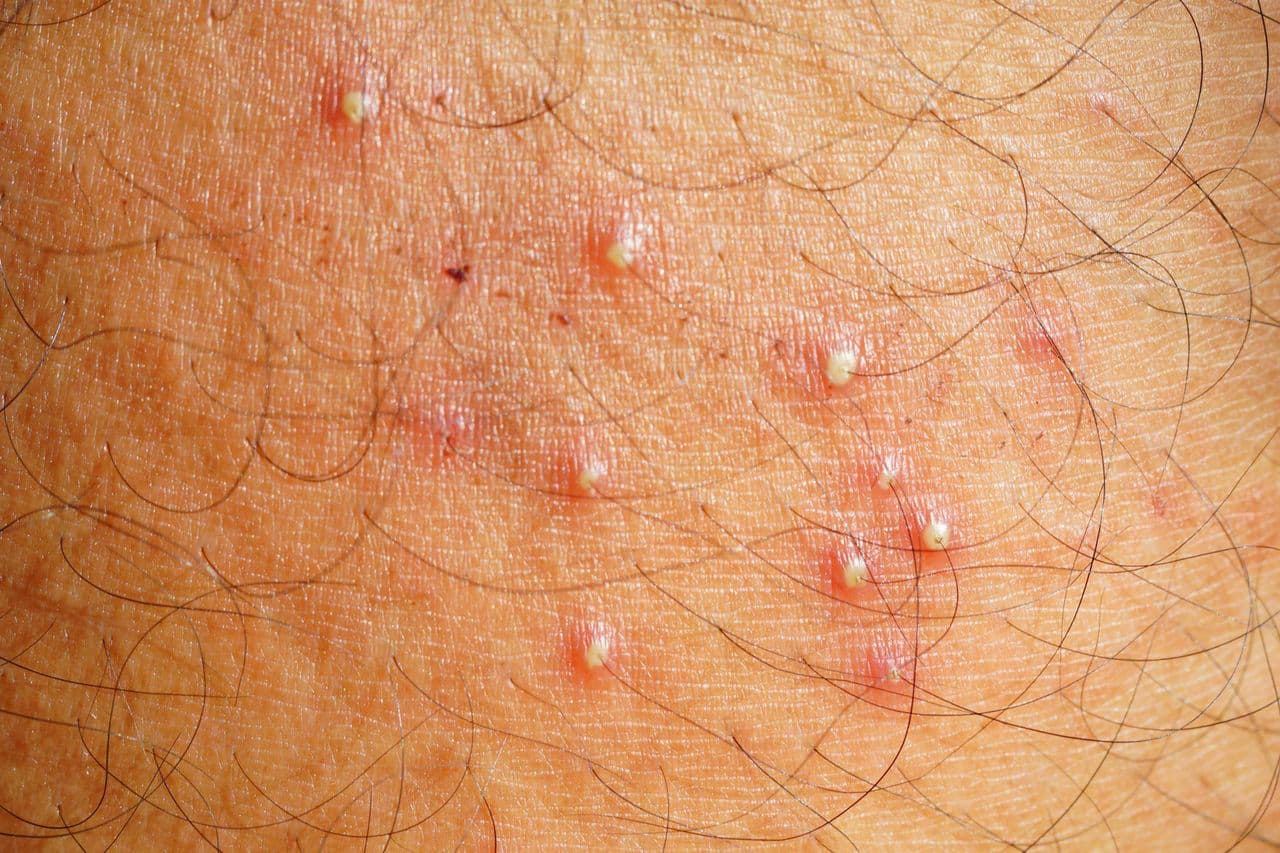
Folliculitis
Folliculitis is an inflammation of the hair follicle (the sac from which a hair grows). Although this skin condition is common and often mild, it can be bothersome due to itching, painful pustules, and recurrences. By identifying the cause in time and applying appropriate care, folliculitis is usually successfully managed and does not leave long-term consequences.
Folliculitis can occur anywhere hair grows—from the face and scalp to the torso, buttocks, or legs. It is especially common after shaving, sports, sauna, or swimming pool. For some people, it recurs, especially if risk factors persist or follicles are constantly irritated.
What is it?
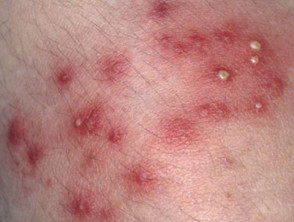
Folliculitis is an inflammatory condition characterized by papules (small bumps) or pustules (bumps with pus), located around the hair opening. It is classified into superficial (affecting the upper layer of the follicle) and deep (inflammation involving deeper parts of the follicle). Superficial folliculitis is usually milder and short-term, while deep folliculitis can be more painful, with larger, harder inflammatory nodules, sometimes developing into furuncles (deeper abscesses).
Folliculitis can be of infectious origin (caused by bacteria, fungi, viruses, or parasites) or non-infectious—for example, due to mechanical irritation (friction), ingrown hairs, or clogged follicles. In shaving areas, "pseudofolliculitis" often occurs when ingrown hairs cause inflammatory bumps that mimic infection.
Causes and Risk Factors
The most common causes of folliculitis:
- Bacteria—most commonly Staphylococcus aureus. Folliculitis can also occur after sauna or poorly maintained pools, associated with Pseudomonas species ("hot tub folliculitis").
- Fungi—especially yeast, which thrive in warm, moist conditions (sweaty body areas, tight synthetic clothing).
- Viruses—less common causes, but follicle inflammation can occur on damaged or irritated skin.
- Parasites / mites—for example, Demodex mites may be involved in some cases, especially on the face.
- Non-infectious factors—friction, pressure (helmets, tight clothing), ingrown hairs after shaving or depilation, follicle blockage by cosmetic products.
Risk is increased by:
- Increased sweating and warm, moist conditions (sports, working in heat).
- Skin rubbing against tight clothing or equipment (e.g., backpack straps, protective helmets).
- Shaving against the direction of hair growth, infrequent blade changes, or dull blades, irritation from depilation.
- Skin barrier damage—micro-cracks from scratching, overly harsh exfoliants, aggressive cleansers.
- Skin care products that clog pores (comedogenic formulations), unsuitable oils.
- Immune response peculiarities—weakened immune system, chronic diseases, skin conditions (e.g., atopic dermatitis).
- Carrying skin microorganisms in the nasal passages or on the skin, promoting recurrences.
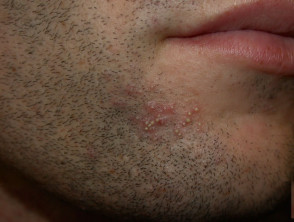
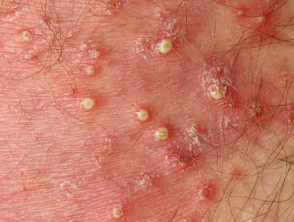
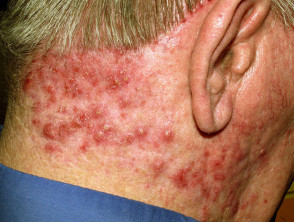
Symptoms
Main symptoms of folliculitis:
- Small red bumps or pustules, often with a hair visible in the center.
- Itching, burning sensation, or pain.
- Sensitivity to pressure or rubbing from clothing.
- Post-inflammation—temporary hyperpigmentation (darker spots) or, in rare cases, scarring, especially after deeper folliculitis.
Commonly affected areas: face and beard area, neck, scalp, back and chest, buttocks, thighs, and calves. "Hot tub" folliculitis often spreads after bathing and appears in areas where swimwear creates a warmer, more humid environment.
When to See a Doctor?
Consult a dermatologist if:
- The rash does not subside within 1–2 weeks despite proper care.
- A wide, deep, or very painful inflammation develops, forming purulent nodules.
- Folliculitis recurs or spreads to new areas.
- You develop a fever, general weakness, or swollen lymph nodes.
- You are immunocompromised (e.g., after illness, due to chronic conditions) or have other skin diseases.
- Lesions are on the face or head, where there is a higher risk of complications and scarring.
Our clinic's dermatologists help accurately identify the cause, assess the severity of the condition, and develop an individualized treatment and care plan. Consultations can be conducted in person or remotely, ensuring you receive help conveniently and quickly.
Diagnosis
Folliculitis diagnosis is usually based on clinical evaluation—the doctor examines the lesions, assesses their distribution, development time, and relationship with provoking factors (shaving, sports, bathing). If necessary, additional tests are applied:
- Microbiological culture from a pustule or lesion when bacterial folliculitis or frequent recurrences are suspected.
- KOH microscopy (for fungi or Demodex mites), especially if rashes are resistant to usual care or there is a connection with oilier skin areas.
- PCR tests—for identifying specific viral agents, if indicated clinically.
- Dermatoscopy—helps differentiate folliculitis from other rashes, assess ingrown hairs.
If folliculitis recurs, the doctor may look for predisposing factors (e.g., skin barrier disorders, risky habits, possible microorganism carriage) and work with you to develop a preventive plan.
Our iDerma clinic's dermatologists help accurately diagnose, assess severity, and select an individualized treatment and care plan. A dermatologist consultation in person or online allows for quick clarification of the cause and the prescription of the most appropriate, safe treatment plan.
Treatment
The treatment strategy depends on the origin and severity of folliculitis. Treatment usually begins with general measures to reduce inflammation and risk factors. Targeted treatment measures are prescribed if necessary.
General principles:
- Skin hygiene—gentle, non-aggressive cleansers, thorough washing after sports, sauna, or swimming pool.
- Reducing friction—looser, breathable clothing; avoid prolonged wearing of wet clothes.
- Shaving corrections—shave in the direction of hair growth, do not use dull blades, avoid shaving too close to the skin, take breaks if irritation occurs.
- Warm compresses for superficial pustular rashes—help unclog the follicle and reduce discomfort.
- Do not squeeze or press pustules—this reduces the risk of scarring, pigmentation, or infection spread.
Targeted treatment (selected by the doctor, depending on the cause):
- Antiseptic and antimicrobial agents topically—often sufficient for superficial cases.
- Antifungal agents if fungal influence is identified.
- Antibacterial agents topically or systemically—for deeper or widespread bacterial folliculitis.
- For deep abscesses, the doctor may perform professional drainage and prescribe additional therapy.
In cases of recurrent folliculitis, the doctor may recommend reviewing hair removal methods (e.g., procedures for long-term hair growth reduction) to decrease the likelihood of ingrown hairs and inflammation.
Care and Prevention
Daily habits that reduce the risk of folliculitis:
- Smart shaving—shave on clean, moistened skin, slowly, in one direction; rinse with cold water after shaving, gently dry, use non-irritating, non-comedogenic products.
- Clothing—choose breathable fabrics (cotton, technical sports fabrics that wick moisture), avoid wearing sweaty or wet clothes and swimwear for long periods.
- Sports and saunas—wash after activity, do not use shared towels, regularly wash sportswear at higher temperatures.
- Swimming pools—choose clean, well-maintained pools; wash after swimming; if skin is sensitive, consider shorter water exposure.
- Protecting the skin barrier—avoid aggressive exfoliation and products, choose gentle, non-comedogenic care products.
- Do not use shared hygiene items (razors, towels, sponges), regularly change razor blades.
If folliculitis recurs, it is advisable to create an individual prevention plan with a dermatologist, assessing lifestyle, sports habits, skin care, and hair removal methods.
Conclusions
Folliculitis is a common and usually mild skin condition, but it can be bothersome due to recurrences, itching, pain, and cosmetic discomfort. The key is to identify the cause, reduce risk factors, and apply appropriate, gentle skin care. If rashes are deep, spreading, or not subsiding, see a doctor—the earlier the treatment is selected, the lower the risk of complications and scarring. Our iDerma clinic specialists will help create an individual, safe, and effective treatment and prevention plan, taking into account your lifestyle and skin needs.