Introduction
Psoriasis is a chronic, non-contagious, and often wave-like inflammatory skin disease. It affects about 2-4% of the population, with symptoms ranging from a few small, scaly patches to widespread skin lesions. Although psoriasis cannot be permanently cured, modern care and treatment options allow for effective management of the disease, enabling a full and active life.
Psoriasis is not infectious – it cannot be "caught" through contact or by using the same items. However, this disease is more than just skin deep: it can affect emotional well-being, sleep, social life, and self-confidence. Properly chosen treatment, consistent daily skin care, and support from specialists are the three pillars that help manage symptoms and improve quality of life.
What is it?
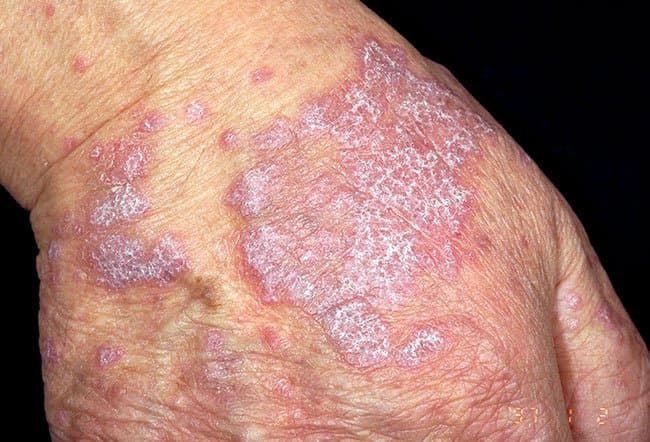
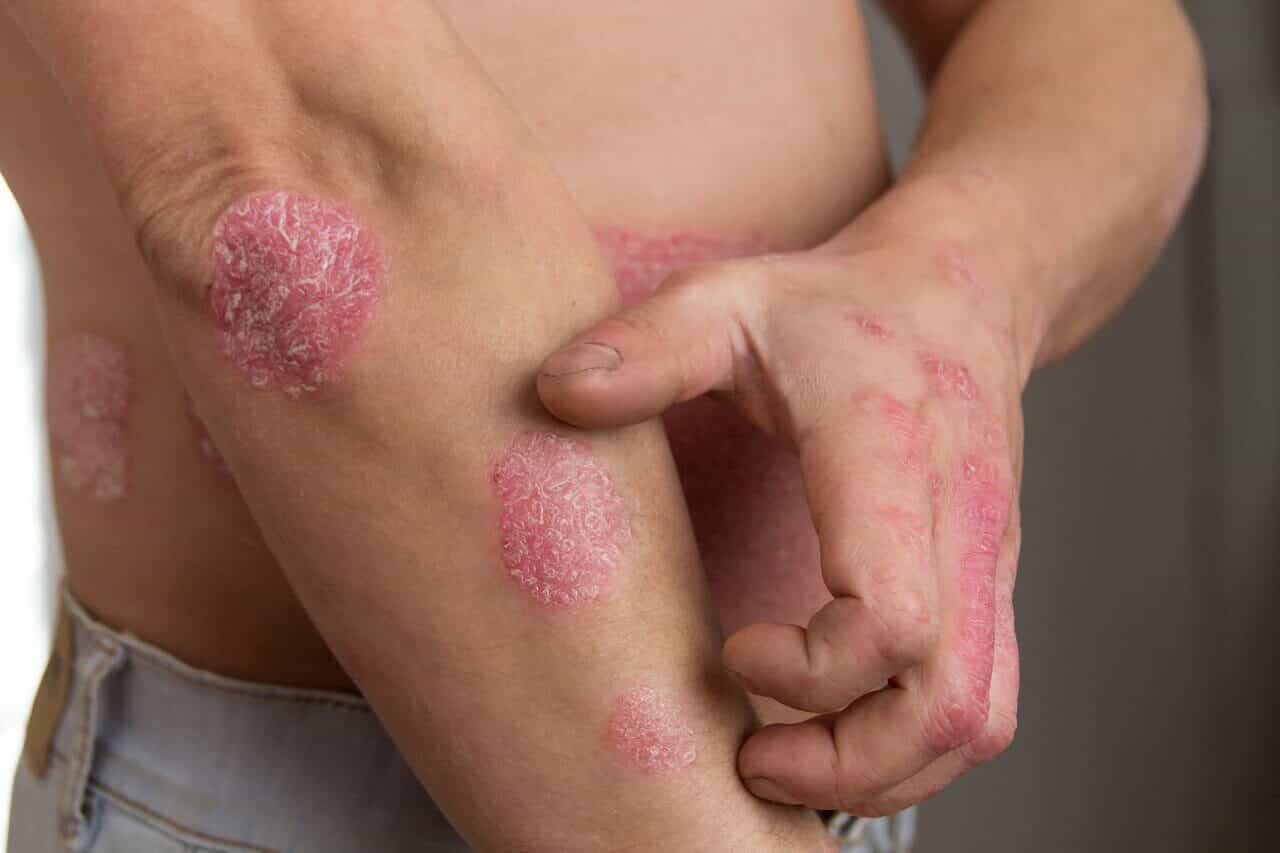
Psoriasis is an immune-mediated skin disease where skin cells multiply faster than normal, and immune cells cause inflammation. This results in red or darkened plaques with clear borders, covered with silvery or whitish scales. The disease is most commonly diagnosed in adults (especially between the ages of 30-39 and 50-69), but it can also occur in children and adolescents. It affects both women and men equally.
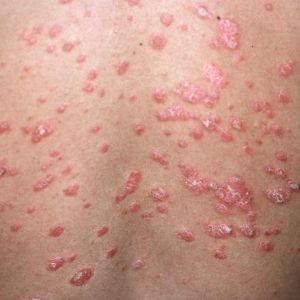
Psoriasis can take several forms. The most common is plaque psoriasis, affecting elbows, knees, lower back, buttocks, and scalp. Other forms include guttate psoriasis (many small drop-like lesions, often following upper respiratory tract infections), inverse psoriasis (lesions in skin folds), pustular and erythrodermic forms (rare but severe). Nail psoriasis can cause changes in nail color and structure, while psoriatic arthritis can lead to joint pain, swelling, and morning stiffness.
The disease is characterized by a wave-like course: periods of exacerbation are followed by phases of improvement or remission. Appropriate treatment helps prolong remissions and reduce the intensity of exacerbations.
Causes and Risk Factors
Psoriasis is a multifactorial disease, meaning it is caused by several interrelated mechanisms:
- Immune factors: It is an autoimmune condition where immune cells mistakenly trigger skin inflammation and accelerate keratinocyte proliferation.
- Genetics: About 30-40% of those affected have a family history of psoriasis. Heredity does not guarantee the disease will manifest, but it increases the risk.
- Environmental factors and triggers: Skin injuries (Koebner phenomenon), infections (especially upper respiratory tract), stress, smoking, excessive alcohol consumption, low humidity and cold, obesity, and certain medications can provoke or worsen the disease.
- Comorbid conditions: Psoriasis can be associated with metabolic syndrome, increased risk of cardiovascular diseases, diabetes, fatty liver disease, as well as anxiety and depression.
Recognizing and managing risk factors is an important part of the treatment plan. Even if they cannot be completely avoided, reducing their impact helps decrease the frequency and intensity of exacerbations.
Symptoms
The signs of psoriasis can vary and depend on the form of the disease and the location of the lesions:
- Skin plaques: Red or darkened, well-defined, hardened areas covered with silvery or white scales. They may itch, sting, hurt, and sometimes crack and bleed.
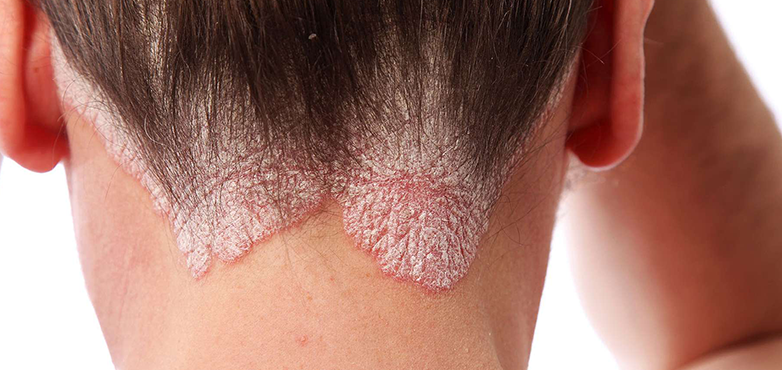
- Scalp: Large scales, itching, plaques, sometimes extending beyond the hairline and visible at the hair growth line.
- Nails: Pitting, color changes, brittleness, separation from the nail bed.
- Skin folds and genital area: More often shows bright redness with fewer scales, can be painful due to friction and moisture.
- Joints: Psoriatic arthritis causes pain, swelling, stiffness (especially in the morning), and may affect entheses (tendon attachment sites), such as the heels.
Symptoms can be limited (a few small patches) or widespread, covering a large body surface area. Itching, pain, or changes in appearance can impair sleep, concentration, productivity, and emotional well-being.
When to See a Doctor?
Consult a dermatologist if:
- You notice newly appearing or rapidly spreading scaly plaques on the skin;
- You experience severe itching, pain, skin cracking, or bleeding;
- You have new nail changes (brittleness, color change, separation);
- You suffer from joint pain, swelling, morning stiffness – these may be signs of psoriatic arthritis;
- You experience sudden, whole-body redness or fever – these are symptoms requiring urgent care;
- Symptoms disrupt sleep, productivity, or cause emotional distress;
- You are planning a pregnancy or breastfeeding – an individual treatment plan is needed.
Early consultation helps quickly confirm the diagnosis, assess severity, and choose safe, effective therapy.
Diagnosis
The diagnosis of psoriasis is based on clinical signs and history. A dermatologist evaluates the condition of the skin, scalp, and nails, the course of the disease, and possible triggers. A characteristic sign is the Auspitz phenomenon: scraping off scales may reveal pinpoint bleeding on the skin surface. In atypical cases or to rule out other diseases, a skin biopsy may be performed. If nails are affected, tests may be needed to differentiate psoriasis from fungal infections.
To assess the severity of the disease, standardized indicators are used (e.g., assessment of affected body area and quality of life questionnaires). It may also be recommended to check for comorbid conditions (blood pressure, body mass index, etc.), as they influence treatment strategy.
Our clinic's dermatologists help accurately diagnose, assess the extent of lesions, develop an individual treatment and care plan, and, if necessary, coordinate collaboration with rheumatologists or other specialists. Consultations are available both in-person and remotely (online), allowing you to receive assistance conveniently and quickly.
ARTICLE_GIF
Treatment
While psoriasis is not curable, modern treatment options allow for significant symptom reduction, prolonged remission periods, and improved quality of life. The choice of treatment depends on the form of the disease, the extent of the lesions, comorbid conditions, lifestyle, and individual needs. A stepwise and combined approach is often used.
- Daily basic care: This is the foundation of all treatment steps. Moisturizing, skin barrier-restoring creams, and gentle cleansers are recommended. Keratolytic agents help soften scales and reduce thickening. Regular care reduces itching, tightness, and helps other treatments work better.
- Topical treatment: Various anti-inflammatory, keratolytic, and regeneration-promoting preparations are applied directly to affected areas. They are especially suitable for limited, mild, or moderate psoriasis, as well as maintenance therapy during remission.
- Phototherapy: Treatment with ultraviolet light in medical doses. It may be used for widespread lesions or if topical treatment is insufficiently effective. Phototherapy helps suppress skin inflammation and normalize cell proliferation. Courses are conducted under specialist supervision.
- Systemic therapy: Prescribed for moderate to severe psoriasis, nail psoriasis, psoriatic arthritis, or when there is a significant impact on quality of life. This may include traditional immunomodulating therapy or biological therapy targeting specific inflammatory pathways. The choice of treatment is determined by the balance of efficacy, safety, and the patient's lifestyle.
- Combinations and maintenance therapy: Multiple methods are often combined (e.g., basic care + topical treatment + phototherapy), and once good control is achieved, a maintenance regimen is adopted to prevent frequent exacerbations.
The specialist and patient evaluate goals (e.g., reducing itching, improving sleep, reducing affected areas) and select a realistic, implementable plan for daily life. Special attention is given to safety – considering comorbid conditions, planned pregnancy, work, and lifestyle.
Care and Prevention
Psoriasis control involves not only medication but also consistent self-care and risk factor reduction. Practical tips:
- Moisturizing: Apply moisturizers or ointments daily. Products with skin barrier-restoring components help reduce tightness and itching, gently reduce scaling.
- Gentle hygiene: Avoid hot water and harsh cleansers. Choose gentle, skin-friendly products. After bathing, gently pat the skin dry, do not rub.
- Scalp: Choose gentle shampoos, regularly clean scales so active ingredients reach the skin. Avoid damaging the skin with intense scratching.
- Sun and climate: Moderate sun exposure can improve the condition, but protection from sunburn is crucial. In cold seasons, humid indoor air and regular skin moisturizing help.
- Clothing and friction: Choose looser, breathable fabrics (e.g., cotton), reduce friction in folds.
- Lifestyle: Quit smoking, limit alcohol, balanced diet, and weight control help reduce inflammation and improve treatment effectiveness.
- Stress management: Sleep, physical activity, relaxation techniques, psychological support. Emotional health directly affects the course of the disease.
- Injury prevention: Protect the skin from scratches, cuts, burns (Koebner phenomenon – a lesion may appear at the site of injury).
- Nails: Keep them short, avoid aggressive manicures or irritating nail products. Wear gloves for household tasks.
- Consistency: Follow the plan set by your doctor. Even when the condition improves, a maintenance regimen helps maintain remission.
If you feel anxiety, sadness, or social discomfort due to your skin condition – this is understandable and common. Share it with your doctor; sometimes additional explanations are enough, and sometimes psychological help or support groups are beneficial.
Frequently Asked Questions
- Is psoriasis contagious?
No. Psoriasis is not infectious – it cannot be "caught" from another person through touch, air, or shared items. - Is psoriasis hereditary?
The risk is higher if close relatives are affected, but heredity does not mean the disease will necessarily manifest. Environmental factors are also important. - Can diet help?
A balanced diet, weight control, reduced alcohol consumption, and an anti-inflammatory lifestyle can alleviate symptoms and improve treatment outcomes. - Does the sun help?
Moderate sun exposure can relieve symptoms for some, but protection from sunburn is essential. Sunburn can worsen psoriasis. - How does psoriasis differ from eczema?
Psoriasis is characterized by well-defined plaques with silvery scales and more frequent involvement of elbows, knees, and scalp. Eczema often presents with intense itching, redness, and weeping skin, with more diffuse lesions. A dermatologist makes the precise diagnosis. - Can I exercise?
Yes. Physical activity is beneficial for overall and emotional health. Choose breathable clothing, avoid excessive friction, and shower promptly after workouts.
Conclusions
Psoriasis is a common, non-contagious, and manageable chronic skin disease. With proper skin care, limiting risk factors, and applying scientifically-based treatment, long-term symptom control can be achieved, allowing for a fulfilling life. Each person's situation is unique, so the best results are achieved with an individually tailored plan and consistent collaboration with specialists.