Introduction
Stasis dermatitis, also known as gravitational dermatitis or venous eczema, is a chronic inflammatory skin condition associated with venous insufficiency in the lower extremities. When blood has difficulty returning from the legs to the heart, venous pressure increases, fluids accumulate in the tissues, and the skin undergoes prolonged inflammation. This results in itching, redness, scaling, changes in skin color, and sometimes wounds (venous ulcers). This condition is more common in older age but can also develop in younger individuals, especially those with varicose veins, a history of blood clots, or those who work in sedentary or standing positions for long periods.
By recognizing symptoms early and applying comprehensive care, discomfort can be significantly reduced, progression can be slowed, and complications can be avoided. Below, we provide essential information about this condition—from causes and symptoms to diagnosis, treatment, and daily prevention.
What is it?
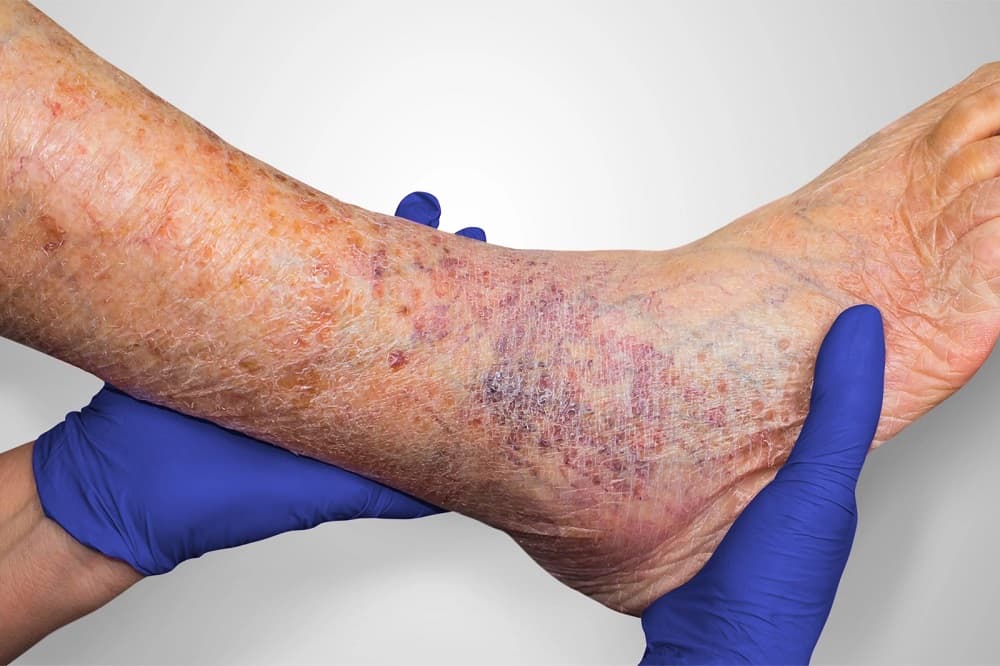
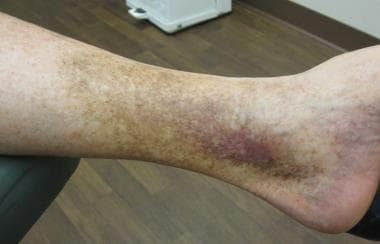
Stasis dermatitis is an inflammatory skin reaction arising from prolonged venous blood stasis in the legs. When venous valves function inefficiently or veins are dilated, blood stagnates in the calves and ankles, increasing venous pressure. Fluids and components of blood cells leak from the blood vessels into surrounding tissues, causing swelling, skin irritation, and chronic inflammation. Over time, blood pigment (hemosiderin) may accumulate, causing the skin to become brown, gray, or even purple. Some patients develop skin hardening and thickening (lipodermatosclerosis), making the skin fragile and prone to cracking, with hard-to-heal venous ulcers often appearing in certain areas (usually the inner ankle region).
Stasis dermatitis belongs to the group of chronic inflammatory dermatoses, characterized by periods of exacerbation and relief. The cause is influenced not only by local skin factors but also by circulatory status, overall health, and lifestyle.
Causes and Risk Factors
The primary cause of stasis dermatitis is venous insufficiency, which is influenced by several interrelated factors:
- Venous valve insufficiency and varicose veins (dilated, twisted veins).
- Previous episodes of deep or superficial vein thrombosis.
- Prolonged standing or sitting work, low physical activity, limited mobility (e.g., after surgeries, injuries).
- Obesity, which increases pressure on the venous system.
- Pregnancy (especially multiple pregnancies) due to hormonal and mechanical changes.
- Age (due to decreased tissue elasticity and weakened valve function).
- Genetic predisposition to venous diseases.
- Heart failure, chronic kidney or liver diseases, which can promote swelling.
- Smoking and high blood pressure, negatively affecting blood vessel walls.
Understanding these factors helps assess individual risk and take preventive measures in a timely manner—especially when there is a family history of venous diseases or venous ulcers.
Symptoms
Early signs often begin with swelling of the ankles and calves at the end of the day. The skin may feel tight and shiny. Later, the following may appear:
- Changes in skin color: from pink spots to brown, gray, or purple areas, especially around the inner ankle.
- Itching, burning sensation, sensitivity.
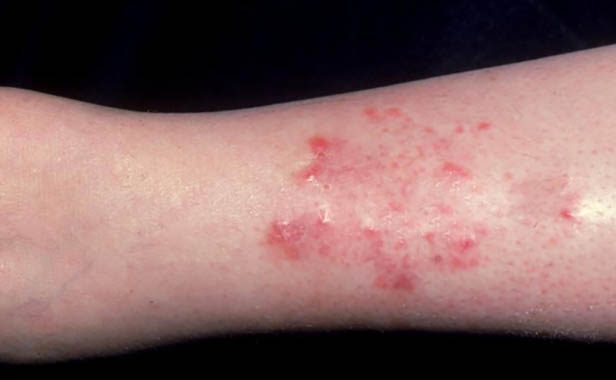
- Scaling, flaking, crusting, sometimes oozing.
- Dryness and roughness of the skin, with a tendency to crack.
- Sensation of heaviness, aching, cramping in the legs, worsening in the evening or after prolonged standing/sitting.
- Skin hardening, thickening (lipodermatosclerosis), the calf may take on an "inverted champagne bottle" shape.
- Increased risk of infections and tendency towards contact dermatitis, especially when using irritating hygiene or care products.
- In advanced cases—venous ulcers, most commonly around the inner ankle bone (medial malleolus).
Symptoms usually progress gradually. Some patients mistakenly believe it is "simple skin dryness" or "allergy," thus delaying treatment. Seeking help in a timely manner can prevent trophic ulcers and long-term pain.
When to See a Doctor?
Consult a doctor if you notice changes in skin color, itching, persistent swelling, or pain in the legs. It is especially important not to delay if there are oozing areas, cracks, severely reddened, hot, painful areas, or wounds—these may be signs of infection or venous ulcers. Urgent care is needed if there is fever, increasing pain, or spreading redness.
Diagnosis
The diagnosis is usually made based on the patient's complaints, skin examination, and medical history. The doctor assesses the nature of the swelling, changes in skin color and texture, varicose veins, previous injuries, or thrombosis. Additional tests may be performed if necessary:
- Duplex venous ultrasound – helps assess venous valve function, blood flow, and determine venous insufficiency.
- Assessment of circulation to the limbs (e.g., ankle-brachial index) – important for selecting safe compression therapy.
- Skin scrapings, cultures, or smears, if infection or fungal process is suspected.
- Allergic patch test, if contact dermatitis due to care products or dressings is suspected.
Stasis dermatitis must be differentiated from other conditions that may appear similar—bacterial skin infections, erythromelalgia, contact and atopic dermatitis, fungal infections, psoriasis, or lymphedema.
Our iDerma clinic dermatologists help accurately diagnose, assess the severity of the condition, and develop an individualized treatment and care plan. Consultations are available both in person and online—convenient, fast, and safe.
ARTICLE_GIF
Treatment
Treatment of stasis dermatitis is comprehensive and aimed at three directions: reducing venous stasis, suppressing skin inflammation, and restoring the skin barrier, as well as preventing complications. The plan is always individualized, considering the intensity of symptoms, comorbidities, and lifestyle.
- Compression therapy. Special compression garments help reduce swelling, improve venous blood return, and promote wound healing. It is important to choose the correct size and compression strength and learn to apply them correctly. For safety and effectiveness, compression therapy should be coordinated with a doctor.
- Leg elevation. Several times a day, elevate the calves for 15–30 minutes so that they are above heart level (e.g., lying down with a pillow under them). A slightly elevated foot of the bed can be helpful at night.
- Skin care and barrier restoration. Use gentle, fragrance-free cleansers and rich emollients daily. Products with moisturizers (e.g., glycerin, urea in lower concentrations) and softening lipids are suitable. In cases of heavy oozing, special dressings, "wet-dry" methods, or short-term coverings may be applied as recommended by a doctor.
- Inflammation control. During exacerbation phases, topical anti-inflammatory preparations may be prescribed to reduce redness, itching, and oozing. Long-term care emphasizes gentle, continuous skin care products and avoidance of provoking factors.
- Infection management. If secondary infection is suspected (severe pain, heat, purulent discharge, spreading redness, fever), targeted antimicrobial treatment and wound care are required. Self-treatment with "anything" is not recommended—it can worsen the condition.
- Physical exercises. Regular walking, ankle "pump" exercises (foot flexion-extension), gentle cycling, and water exercises improve calf muscle pump and venous return.
- Lifestyle. Weight management, salt intake limitation, comfortable, non-constricting clothing and footwear, and protecting the skin from injuries. Avoid prolonged immobility—take short breaks every 30–60 minutes.
- Treatment of venous pathology. In cases of significant venous insufficiency, minimally invasive procedures (e.g., vein closure methods, sclerotherapy, microsurgical techniques) may be considered. Decisions are made together with a doctor after evaluating ultrasound data.
The goal of treatment is not only to alleviate symptoms but also to control the underlying cause. Therefore, the best results are achieved through continuous collaboration with a specialist, regular monitoring of the condition, and adjustment of the care plan.
Care and Prevention
Daily care helps maintain results and reduce the risk of exacerbations:
- Move regularly: walk, do ankle and toe exercises, get up from the chair every hour. During long trips, walk or perform foot movements every 1–2 hours.
- Leg elevation: after work or in the evening, spend 15–30 minutes elevating the legs above heart level.
- Compression: wear doctor-recommended compression garments, especially during the day. Learn proper application and follow care instructions.
- Skin nurturing: apply emollients daily, avoid fragranced and harsh surfactant-containing cleansers, and very hot water. Moisturize the skin immediately after washing while it is still slightly damp.
- Clothing and footwear: choose looser clothing that does not constrict the groin or calves, and comfortable footwear with proper support.
- Diet and fluids: limit salt, maintain a normal body weight, drink enough water unless otherwise directed by a doctor.
- Avoid skin irritants: test new care products on a small area, protect the skin from injuries, and do not use abrasive scrubs on damaged skin.
By adhering to these principles, the frequency and severity of exacerbations are significantly reduced, and quality of life improves.
Frequently Asked Questions
- Is stasis dermatitis contagious?
No. It is not an infectious disease. It is related to venous circulation and individual risk factors, so it cannot be contracted from another person. - How does stasis dermatitis differ from "ordinary eczema"?
While symptoms (itching, redness, scaling) may be similar, the cause of stasis dermatitis is venous insufficiency and stasis. Treatment involves not only reducing skin inflammation but also improving venous circulation. - Will I need compression garments for life?
Often, compression is part of long-term care. The strength and wearing regimen are selected individually, considering symptoms, circulatory status, and treatment goals. - Can I exercise?
Yes. Moderate-intensity activities (walking, swimming, cycling) are generally beneficial. Avoid prolonged immobility and choose exercises that strengthen the calf muscle "pump." - How long does it take for the skin to improve?
The first signs of improvement are often seen within a few weeks if compression, skin care, and habit adjustments are consistently applied. It may take several months for deep skin changes and pigmentation to reduce. - When is it necessary to urgently seek medical attention?
If there is increasing pain, fever, a severely reddened, hot, spreading area, or a new wound, as well as sudden swelling of one leg—these may be signs of infection or thrombosis.
Conclusions
Stasis dermatitis is a chronic but manageable condition closely related to venous insufficiency. Early recognition of symptoms, appropriate diagnosis, and consistent treatment help reduce itching, swelling, protect the skin from exacerbations, and prevent venous ulcers. The greatest benefit comes from a comprehensive approach: movement, compression, meticulous skin care, and, if necessary, treatment of venous pathology. If you suspect stasis dermatitis or have been suffering from symptoms for some time, seek professional help—an individualized plan and specialist care help achieve the best, long-term results.