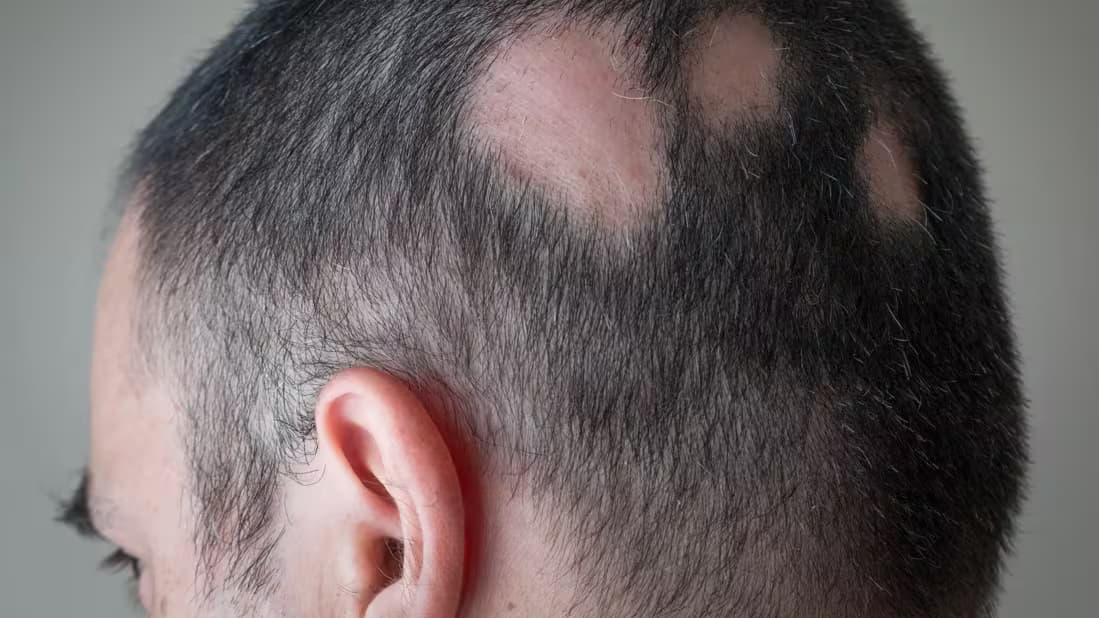
Hair loss is a common problem that affects both men and women. While mild hair shedding is natural, excessive hair loss or bald patches may indicate alopecia. This condition can have different causes, forms, and treatment options. In this article, we will review the main types of alopecia, modern diagnostic methods, and the most effective treatment approaches.
What is it?
Alopecia is a general term describing hair loss or baldness. It can be temporary or permanent, and may affect only the scalp or hair all over the body. In some cases, hair regrows on its own, while in others, medical treatment is required.
Causes and Risk Factors
-
Genetic factors (androgenetic alopecia)
-
Hormonal changes (pregnancy, menopause, thyroid disorders)
-
Autoimmune diseases (e.g., alopecia areata)
-
Stress and emotional imbalance
-
Poor nutrition (deficiency of iron, vitamin D, biotin)
-
Medications (chemotherapy, some antidepressants)
-
Infections (fungal scalp infections)
Types
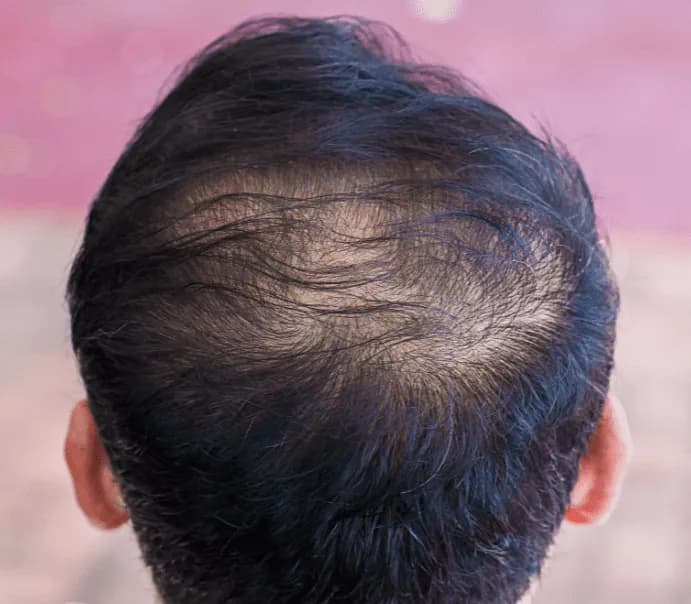
1. Androgenetic alopecia
-
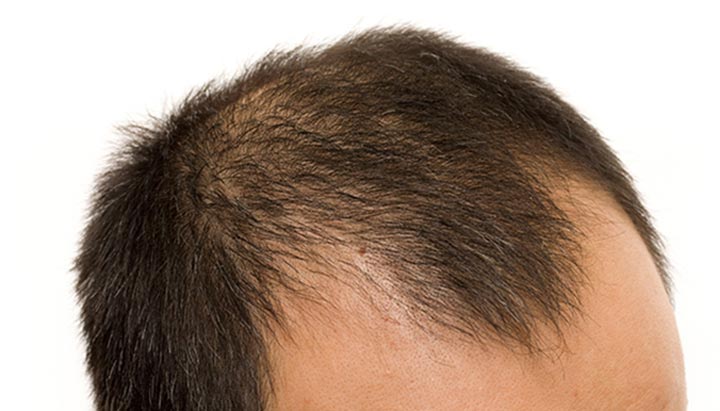
The most common form, caused by hair follicle sensitivity to androgens.
-
In men: receding hairline, balding at the crown.
-
In women: hair thinning at the top of the scalp.
-
New therapies: topical and oral treatments a dermatologist may prescribe to slow hair loss and support regrowth, PRP therapy, laser therapy.
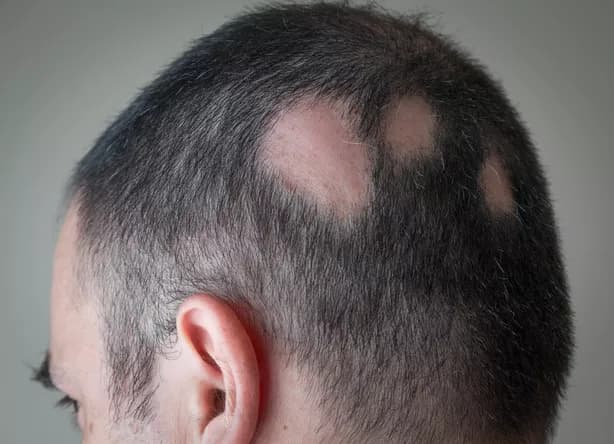
2. Alopecia areata
-
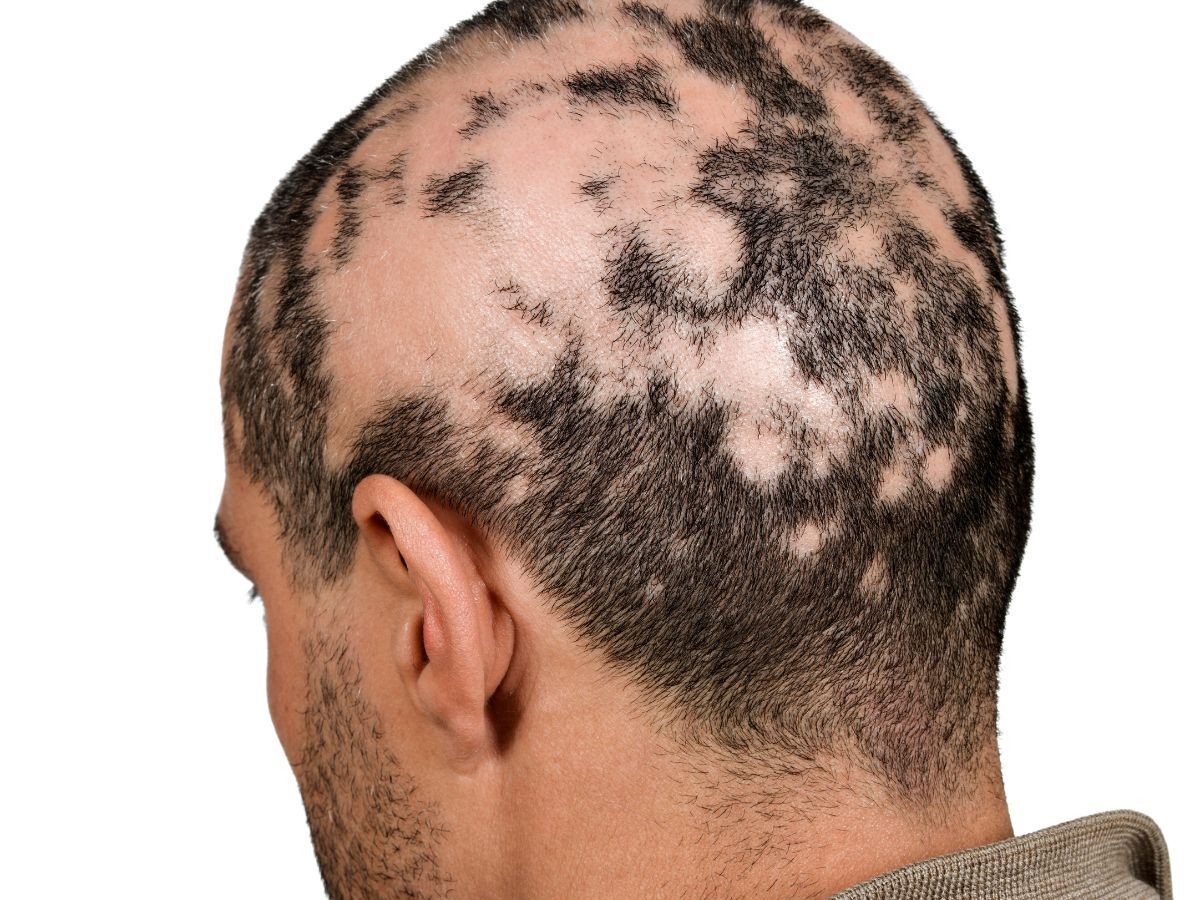
An autoimmune condition causing patchy hair loss.
-
May progress to alopecia totalis (complete loss of scalp hair) or universalis (loss of all body hair).
-
Recent advances: targeted immune-modulating medicines (JAK inhibitors) for moderate to severe cases, prescribed under medical supervision.
3. Telogen effluvium
-
Temporary hair shedding after stress, surgery, infections, or childbirth.
-
Usually resolves within 3–6 months.
4. Cicatricial (scarring) alopecia
-
Hair follicles are destroyed by inflammation and replaced with scar tissue.
-
Hair does not regrow in these areas.
5. Trichotillomania
- A psychological disorder in which a person pulls out their own hair.
Symptoms
-
Noticeable hair thinning or bald patches
-
Excessive hair shedding on combs, pillows, or in the shower
-
Smooth bald spots (typical of alopecia areata)
-
Itching, crusts, redness of the scalp (especially in scarring alopecia)
When to See a Doctor?
-
If hair loss lasts longer than 3 months
-
If bald patches appear
-
If there is a family history of baldness
-
If scalp itching or pain occurs
Diagnosis
-
Trichoscopy (scalp dermoscopy) – visualizes follicle changes, “yellow dots,” miniaturization.
-
Pull test – hair pulling test
-
Blood tests – ferritin, vitamin B12, vitamin D, thyroid hormones, and androgens (in women)
-
Biopsy – if scarring alopecia is suspected or diagnosis is unclear
Treatment Options
Topical treatment
-
A topical regrowth treatment a dermatologist may prescribe to slow hair loss and support regrowth
-
Corticosteroids (topical or injections for alopecia areata)
-
Topical hormone-modulating treatment (a newer alternative to systemic use)
Systemic therapy
-
Oral hormone-modulating treatment (for men with androgenetic alopecia)
-
Anti-androgen treatment (for women with hyperandrogenism)
-
Targeted immune-modulating medicines (JAK inhibitors, used only under medical supervision for alopecia areata)
Other methods
-
PRP therapy (platelet-rich plasma) – promotes follicle regeneration
-
Low-level laser therapy – stimulates hair growth
-
Microneedling – often combined with PRP or a topical regrowth treatment
-
Hair transplantation
Care and Prevention
-
Avoid frequent heat styling (blow dryers, straighteners)
-
Use gentle shampoos suitable for the scalp
-
Maintain a balanced diet and correct nutrient deficiencies
-
Manage stress levels
-
Visit a dermatologist regularly
Psychological Support
Hair loss can have a significant psychological impact. In some cases, psychological counseling or support groups are needed. Patient education and expectation management are essential parts of the treatment process.
Conclusion
Alopecia is a complex but treatable condition. Thanks to scientific progress, it is now possible to diagnose it more accurately and select more effective treatment options. It is very important to consult a specialist early and follow an individualized treatment plan.