Introduction
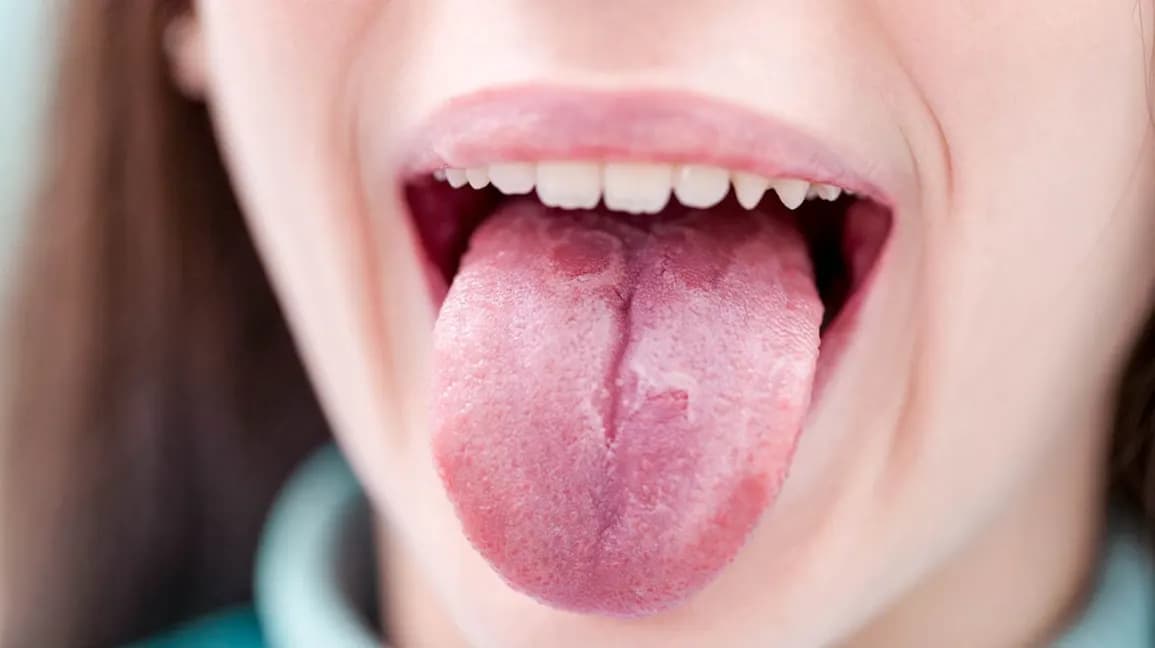
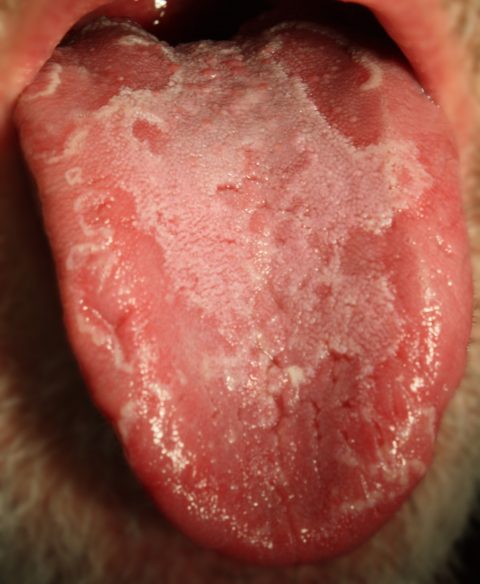
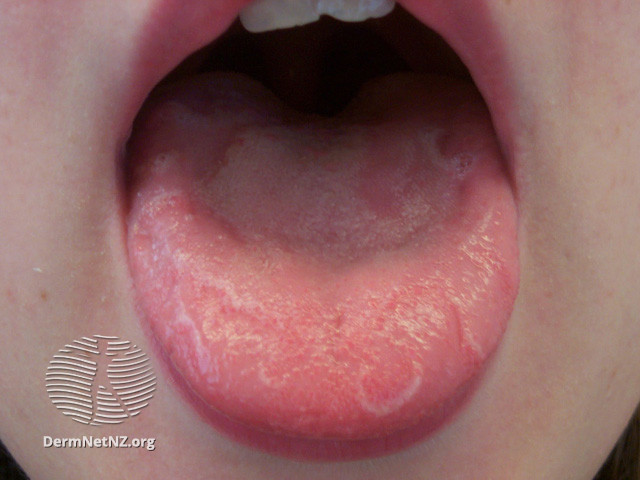
Geographic tongue (also known as benign migratory glossitis) is a condition of the oral mucosa that often causes concern but is benign and non-contagious. It appears as map-like red patches on the surface of the tongue, surrounded by white or grayish, slightly raised lines. Although the appearance can change rapidly and look impressive, this condition is usually not dangerous to health and often resolves on its own, sometimes recurring.
This article explains what geographic tongue is, why it occurs, the most common symptoms, when to see a doctor, how diagnosis is made, and what care and treatment measures can help reduce discomfort.
What is it?
Geographic tongue is an inflammatory, non-malignant, migratory condition of the tongue's surface, where the filiform papillae in certain areas temporarily thin or disappear completely. This results in more pronounced, smooth, red areas that may be surrounded by white or grayish borders. The patches change shape, size, and location over time, giving the tongue a "map-like" appearance.
- It is estimated that geographic tongue occurs in about 1–3% of the population.
- It is more commonly diagnosed in adults; women are affected about twice as often as men.
- This condition is less common in children but can also be diagnosed and is usually harmless.
- Geographic tongue is not associated with poor oral hygiene and does not indicate an infection.
Geographic tongue is considered a benign condition: it is not transmitted to others, is not linked to oral cancer, and usually does not cause long-term complications.
Causes and Risk Factors
The exact cause of geographic tongue is still unclear. It is believed that immune system reactions, genetic predisposition, and certain individual factors may influence its occurrence. Associations have been observed with the following conditions or situations:
- Heredity: familial tendency – geographic tongue may occur in several family members.
- Psoriasis: geographic tongue is more commonly diagnosed in people with psoriasis and similar immune reactions.
- Allergic and atopic conditions: atopic dermatitis, allergic rhinitis, or asthma may be more common among those with geographic tongue.
- Hormonal fluctuations: for some people, flare-ups coincide with pregnancy, menstrual cycle, or other hormonal changes.
- Stress and emotional tension: psychological factors can increase sensitivity and trigger flare-ups.
- Irritants: spicy, very hot, or acidic foods, as well as alcohol, tobacco, intensely foaming toothpastes, or very abrasive brushes can worsen sensations.
- Mechanical friction: rough tooth edges, orthodontic appliances, or dentures can irritate the tongue.
Although nutritional substances (e.g., deficiency of certain vitamins or trace elements) are sometimes mentioned, a clear connection is not always proven. If the condition persists or is accompanied by other general symptoms, a doctor may assess overall health and recommend additional tests if necessary.
Symptoms
The clinical appearance of geographic tongue is usually very characteristic:
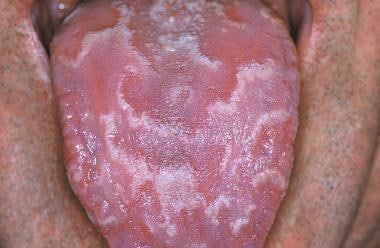
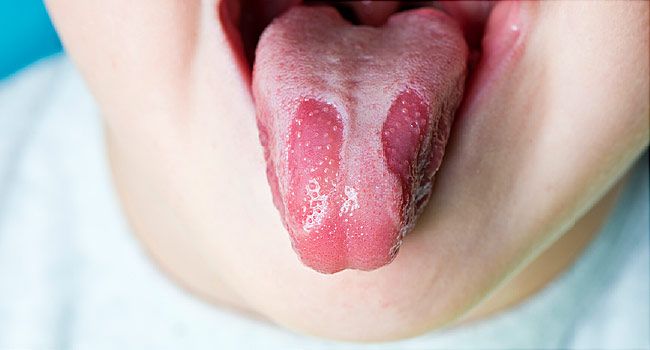
- Irregularly shaped red patches, most often on the dorsal surface of the tongue, sometimes on the sides or tip.
- Thin white or grayish lines around the patches, forming a "map-like" appearance.
- Migration: patches change location and shape over days or weeks, sometimes disappearing completely and reappearing elsewhere.
- Sensations: usually, there are no strong symptoms. Some may experience burning, tingling, or sensitivity, especially when eating spicy, acidic, or hot foods.
- Associated features: fissured tongue (small grooves and cracks on the tongue's surface) is often diagnosed as well – this is also a benign condition.
Geographic tongue is not an infection, so it is non-contagious and cannot be transmitted to others through kissing, utensils, or shared hygiene items.
When to See a Doctor?
Although geographic tongue usually resolves on its own and does not cause complications, a doctor's consultation is recommended if:
- pain, burning, or sensitivity interferes with eating, drinking, or speaking;
- patches spread rapidly, bleed, or become deeply ulcerated;
- other unexplained patches appear in the mouth, thickened white plaques, or bright red, painless patches that do not resolve within 2–3 weeks;
- you experience general symptoms – unexplained fatigue, weight loss, prolonged fever;
- you are pregnant, have chronic illnesses, or are taking immunosuppressive medications – in such cases, any prolonged oral changes should be evaluated by a doctor;
- you have doubts about the diagnosis or want individual care advice.
Diagnosis
The diagnosis of geographic tongue is usually made based on patient history and the characteristic clinical appearance during examination. Due to the specific red, migratory patches with white borders, additional tests are typically unnecessary. If laboratory tests are performed, their results are usually normal.
In some cases, the doctor evaluates other possible causes (differential diagnosis), such as oral candidiasis, oral lichen planus, leukoplakia, erythroplakia, aphthous ulcers, traumatic or nutritional glossitis. In rare cases, when the appearance is atypical or the condition is prolonged, additional consultation or histological examination may be recommended.
Our iDerma clinic dermatologists help accurately diagnose, assess the severity of the condition, and select an individual care plan. We offer consultations both in-person at the clinic and remotely – this is especially convenient when a quick diagnosis or practical care recommendations are needed.
ARTICLE_GIF
Treatment
There is no specific, universal treatment for geographic tongue, as this condition is usually mild and self-limiting. The goal of treatment is to reduce discomfort and limit the impact of irritating factors. The following measures are often helpful:
- Dietary adjustments: temporarily avoid spicy, very hot, or acidic foods (citrus fruits, vinegar, very spicy spices), as well as alcohol, if these products increase sensitivity.
- Non-irritating oral hygiene: choose a softer toothbrush, use non-aggressive toothpastes; brush teeth gently, avoid vigorous tongue scrubbing.
- Soothing rinses: neutral mouth rinses or saline solution can temporarily reduce discomfort and maintain hygiene.
- Sensitivity-reducing gels or creams: topical agents for the oral mucosa can provide temporary relief (use only as recommended by a doctor or pharmacist, swallowing is not recommended).
- Short-term anti-inflammatory measures: in cases of more pronounced inflammation or pain, a doctor may prescribe short-term local treatment.
- Management of comorbid conditions: if psoriasis, atopic, or other immune conditions are present, their control may help reduce tongue symptoms.
For children, observation and avoidance of irritants are usually sufficient. During pregnancy, only safe, non-aggressive measures are typically used; always consult a doctor regarding any therapeutic preparations.
Care and Prevention
Flare-ups of geographic tongue often occur in waves and may appear at certain periods. Daily care helps reduce discomfort and prolong "remission" periods:
- Identify irritants: monitor which foods or drinks cause burning sensations and temporarily avoid them. Keeping a short food and symptom diary for 1–2 weeks can be helpful.
- Choose gentle hygiene products: soft toothbrush, non-aggressive toothpastes without strong irritating components.
- Maintain moisture: drink enough water, avoid habits that dry out the mouth (e.g., smoking, excessive caffeine or alcohol).
- Stress management: sleep, physical activity, and relaxation practices can reduce the frequency of flare-ups.
- Dental and oral health: visit the dentist regularly, correct sharp tooth edges, and maintain orthodontic appliances.
- Do not rub the patches: do not attempt to mechanically "clean" the changes – this will only increase irritation.
If the condition recurs frequently or significantly reduces quality of life, consulting a specialist for individualized planning, identifying possible triggers, and selecting the most appropriate measures is worthwhile.
Frequently Asked Questions
- Is geographic tongue contagious?
No. It is not an infectious disease, so it is not contracted or transmitted to others. - Can geographic tongue turn into cancer?
No. This condition is benign and not associated with oral cancer. - How long does it last?
The lesions can last for several weeks or months, then disappear and recur. The intensity of symptoms often varies. - Is treatment necessary?
Specific treatment is usually not needed. If discomfort is felt, symptomatic measures are applied: avoiding irritants, gentle hygiene, soothing rinses, or sensitivity-reducing topical agents, short-term anti-inflammatory measures recommended by a doctor. - Can children have geographic tongue?
Yes. It usually does not cause significant symptoms in children and resolves on its own, with observation and avoidance of irritants being sufficient. - Can I continue to exercise and eat normally?
Yes. It is recommended to temporarily avoid products that increase burning or sensitivity and to ensure fluid balance.
Conclusions
Geographic tongue is a common, benign, and non-contagious condition of the oral mucosa, characterized by migratory, map-like patches on the tongue. Although the appearance can be concerning, this condition is usually harmless and often resolves on its own. The key is to identify potential irritants, maintain gentle oral hygiene, and apply symptomatic measures if necessary. If symptoms persist, become painful, or there are doubts about the diagnosis, consulting a specialist is advisable. iDerma dermatologists help clarify the diagnosis and develop an individual, safe care plan both in-person and remotely – so you can quickly return to a comfortable daily life.