Newborn Skin Conditions: Introduction
Newborn skin conditions are common, temporary, and usually completely normal skin changes that occur in the first months of a baby's life as the body adapts to a new environment. The sudden transition from the warm, moist environment of the womb to cooler and drier air, clothing, diapers, new microorganisms, and temperature fluctuations leads to various physiological skin reactions. Although rashes or peeling can sometimes be alarming, most newborn skin changes resolve on their own and do not pose a health risk.
In this article, we will discuss the most common newborn skin conditions, their causes, symptoms, diagnosis, treatment, and care principles, and provide clear advice on when to consult a doctor.
What is it?
In the first weeks and months of life, newborns may experience various skin changes. The most common include:
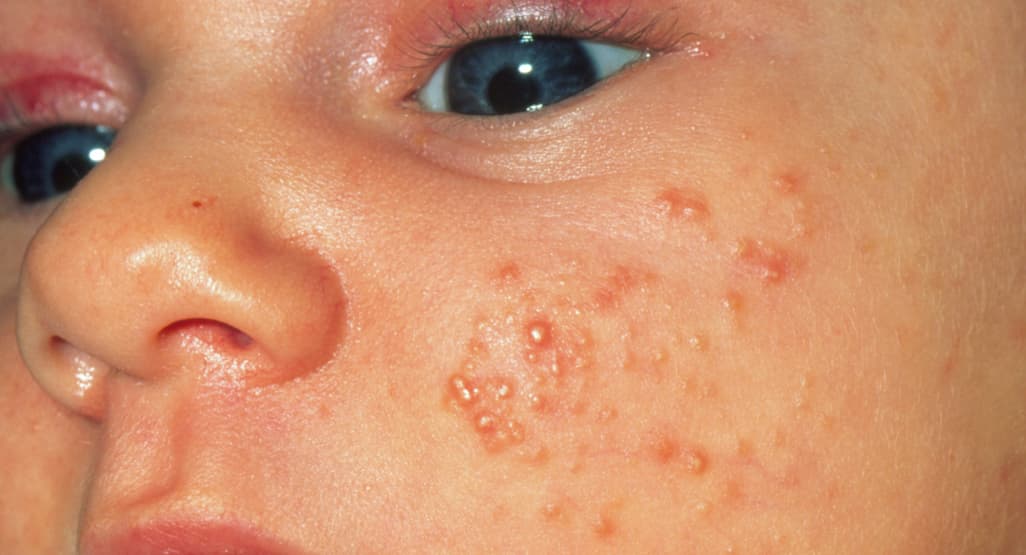
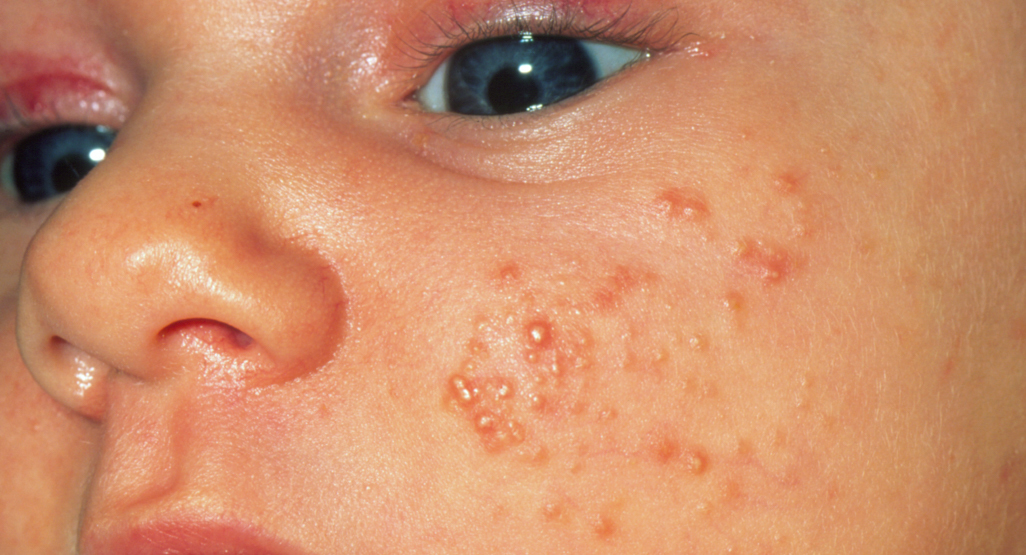
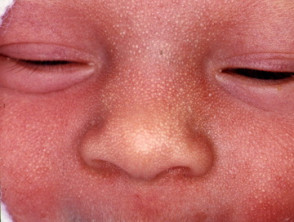
- Newborn acne – small pimples (sometimes with white or yellowish heads) on the face, more often on the cheeks and forehead. Often confused with milia – small white bumps ("whiteheads"), which are actually keratin deposits, not inflammatory acne.
- Heat rash (miliaria) – small, red spots or blisters that occur when sweat glands become blocked in heat, humidity, or excessive layering of clothing.
- Newborn toxic erythema (erythema toxicum neonatorum) – irregular red spots and papules with small whitish or yellow pustules in the center; usually appears on the 2nd–5th day of life and resolves on its own.
- Newborn redness – mild, temporary, usually whole-body skin redness due to circulatory adjustment, thermoregulation, and skin adaptation.
- Mongolian spots – grayish-blue, smooth spots (usually in the lumbar or buttock area) caused by pigment cells in deeper skin layers. This is a congenital, benign pigmentary feature.
- "Stork bite" (nevus simplex) – light red, "salmon" colored spots on the forehead, eyelids, or nape, which become more pronounced when crying or in warmth.
- Newborn peeling (desquamatio neonatorum) – superficial skin peeling, especially on the palms, soles, and legs, more pronounced in post-term infants.
- "Cradle cap" – greasy, yellowish scales and flakes on the scalp (infantile seborrheic dermatitis), sometimes spreading to the eyebrows or behind the ears.
Causes and Risk Factors
Most newborn skin changes are related to the body's natural adaptation mechanisms.
- Hormonal influence: before birth and shortly after, the baby's body is affected by maternal hormones. This can temporarily activate sebaceous glands, resulting in newborn acne or increased skin oiliness.
- Maturity of skin and sweat glands: the newborn's skin barrier is still forming, making it more prone to moisture loss and irritation. Sweat glands tend to become blocked, leading to frequent heat rash.
- Environmental factors: heat, humidity, excessive layering of clothing, synthetic fabrics, and limited air circulation promote rashes and irritations.
- Genetics and ethnicity: Mongolian spots are more commonly observed in infants of Asian, African, and South American descent. Some infants have more pronounced pigmentary changes due to heredity.
- Skin care specifics: frequent washing, harsh cleansers, or heavily scented products can dry and irritate the skin, promoting peeling or rashes.
- Birth term: post-term infants (especially those born after the due date) are more prone to skin peeling, while preterm infants have increased skin sensitivity to environmental factors.
Symptoms
Different conditions manifest differently, but it is important for parents to recognize the most common signs.
- Newborn acne: small pimples, papules, or pustules, usually on the cheeks, forehead, and nose. The skin may appear red, but the baby usually does not experience itching or pain.
- Milia: small, firm, white bumps, usually on the nose, cheeks, or chin. They are painless and do not surface when pressed.
- Heat rash: red spots or blisters in warmer, enclosed areas – on the neck, back, chest, armpits, or diaper area. They may itch slightly but are mostly bothersome due to appearance.
- Toxic erythema: irregular red spots with small light pustules in the center, spreading in patches that appear quickly and disappear within a few days.
- Newborn redness: mild, temporary redness that becomes more pronounced after bathing or in warmth, disappearing when the baby calms down or cools down.
- Mongolian spots: grayish-blue, smooth, painless skin areas (usually in the lumbar and buttock region), resembling a bruise, but their color is uniform, without pain.
- "Stork bite": light red, "salmon" colored spots on the forehead, eyelids, or nape; they become more pronounced when crying and fade over time.
- Newborn peeling: superficial skin peeling, small flakes, often without redness or discomfort.
- "Cradle cap": yellowish, greasy scales and flakes on the scalp; the scalp may be slightly red, but it usually does not bother the baby.
When to Consult a Doctor?
Although most newborn skin conditions are benign and resolve on their own, consult a doctor or dermatologist if you notice:
- high temperature, lethargy, poor feeding, or other signs of general condition deterioration;
- blistering, painful, or rapidly spreading rashes;
- severe skin redness covering large areas, with oozing, unpleasant odor, or yellow crusts;
- bleeding, oozing, or hardened lesions;
- rashes appearing on the palms and soles (less common and may indicate another cause);
- pigmentary spots that change color, size, or surface;
- a rash that does not resolve or worsens over a few weeks despite proper care.
Diagnosis
Most newborn skin conditions are diagnosed by a doctor during an examination, assessing the appearance, spread, timing of the rash, and the baby's overall well-being. A thorough parental interview about care, used products, clothing, and environmental temperature helps to more accurately determine the cause.
In rarer cases, if the rash is unusual, severe, or an infection is suspected, additional tests may be needed – skin scraping, microscopic evaluation, or other tests. In the case of pigmentary spots, photodocumentation and dynamic observation are often sufficient.
Our clinic's dermatologists help accurately diagnose, assess the severity of the condition, and select an individual care and treatment plan. Consultations are available both in person and remotely – convenient when quick advice is needed or the rash changes.
Treatment
Most newborn skin conditions resolve on their own and do not require specific treatment. The most important thing is gentle care, patience, and regular monitoring. Here are the main principles for the most common conditions:
- Newborn acne and milia: wash the face once a day with lukewarm water, use gentle, fragrance-free cleansers suitable for babies. Avoid greasy, pore-clogging products and do not squeeze pimples or milia – this can cause scarring or inflammation. In most cases, changes resolve within a few weeks to months.
- Heat rash: maintain a cooler, well-ventilated environment, dress the baby in breathable, cotton clothing, avoid excessive layering. Bathe with lukewarm water, gently pat the skin dry. Avoid hard-to-wash, very greasy products that can further clog pores.
- Toxic erythema and newborn redness: no treatment is needed. Ensure a comfortable environment, do not let the baby overheat. Rashes usually resolve within a few days.
- Newborn peeling: moisturize the skin with gentle, fragrance-free products suitable for babies. Avoid frequent bathing and harsh cleansers that can dry the skin. Do not peel the flakes – they will gradually shed.
- "Cradle cap": before bathing, apply a small amount of gentle emollient, then gently brush the scalp with a soft brush and rinse. Do not scrape the scales with nails – this can damage the skin. If redness is pronounced or scales spread beyond the scalp, consult a doctor.
- Mongolian spots and "stork bite": no treatment is needed. These spots tend to fade on their own; on the face, they often disappear within 1–2 years, on the nape, they may persist longer. If the spots are of unusual color, surface, or increase significantly, seek evaluation.
Always remember: if the skin condition raises doubts, consult a specialist. A dermatologist's consultation in person or online helps quickly clarify the diagnosis and select the most appropriate, safe care plan.
ARTICLE_GIF
Care and Prevention
Proper daily care helps rashes subside faster and strengthens the newborn's skin barrier.
- Bathing: bathe in lukewarm water; use gentle, fragrance-free cleansers only when necessary. Often, it is enough to rinse with water daily and fully bathe a few times a week.
- Moisturizing: gently pat the skin dry (do not rub), apply moisturizer within a few minutes after bathing to "lock in" moisture.
- Clothing: choose cotton, breathable clothing; avoid synthetic fabrics and excessive layering. On sunny days, prioritize lightweight, long-sleeved clothing and a hat.
- Temperature and humidity: maintain a cooler (about 20–22 °C) and moderately humid room; avoid overheating and excessive humidity.
- Diaper area: change diapers frequently, allow the skin to "breathe," use protective barrier products if needed. This is important even if the main rash is in another area.
- Products: choose products with minimal ingredients, free of fragrances and dyes. Avoid very greasy or hard-to-wash products on hot or sweat-prone areas.
- Do not pick or squeeze: do not squeeze pimples, do not scrape scales – this avoids infection and scarring.
- Safe sun exposure: avoid direct sunlight, especially at midday; choose shade and protective clothing. A baby's skin is extremely sensitive to UV rays.
Frequently Asked Questions
- Are newborn skin rashes contagious? No. Most rashes (newborn acne, toxic erythema, miliaria, "cradle cap") are not infectious and do not spread between people.
- What is the difference between newborn acne and milia? Acne consists of inflammatory pimples or pustules, often red; milia are small, white, hard keratin cysts without redness. Both conditions usually resolve on their own.
- How long does "cradle cap" last? Usually a few weeks or months. With proper care (softening and gentle brushing), it gradually fades.
- Are Mongolian spots bruises? No. They are congenital pigmentary changes in deeper skin layers. They are painless, do not bulge, and often gradually fade as the child grows.
- Can I use oil on my baby's skin? For some babies, gentle, minimal-ingredient emollients are suitable, but very greasy or hard-to-wash products in hot, sweaty areas can promote heat rash. If in doubt, consult a specialist.
- When is a doctor's examination necessary? If the rash spreads, the baby has a fever, lesions are painful or oozing, yellow crusts appear, pigmentary spots change appearance, or rashes do not resolve within a few weeks.
Conclusions
Newborn skin conditions are a common and in most cases completely normal phenomenon of a baby's adaptation to a new environment. Although rashes, peeling, or redness may cause concern, they usually resolve on their own, and the most important thing is gentle and consistent daily care. Pay attention to environmental temperature, clothing choices, gentle care products, and avoid any mechanical skin irritation.
If in doubt or if you notice warning signs, consult specialists. iDerma clinic dermatologists help accurately assess newborn skin changes, distinguish physiological phenomena from rarer diseases, and develop an individual, safe care plan – consultations are also available remotely. Such attention allows parents to feel more at ease, and the baby's skin to adapt and mature healthily.