Granuloma Annulare
Granuloma Annulare (Latin: granuloma annulare) is a chronic, usually benign inflammatory skin condition characterized by ring-shaped or crescent-shaped, smooth, slightly raised papules and plaques. Although the rash often appears striking and may cause concern, most cases are asymptomatic and not harmful to health. The key is to properly identify it, differentiate it from other skin conditions, and, if necessary, choose a safe treatment.
What is it?
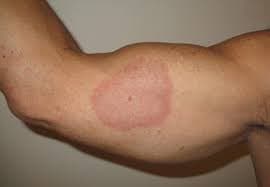
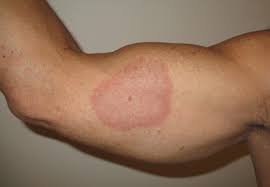
Granuloma annulare is a skin immune system reaction, where granulomatous inflammation forms in the dermis around altered collagen (known as necrobiosis). Externally, it manifests as smooth, firm, pinkish skin-colored or brownish papules that tend to form rings with more defined edges and a calmer center. The hands, feet, finger joints, ankles, and wrists are most commonly affected; in rarer cases, the rash may spread to the trunk or limbs.
This condition is usually cosmetic and tends to regress spontaneously, but in some patients (especially with the generalized form), it can be prolonged, recurrent, or accompanied by mild itching.
Causes and Risk Factors
- Immune reaction: The exact cause is unknown, but it is believed to be an overactive skin immune system response to internal or external stimuli.
- Possible triggering factors: Minor injuries, scratches, insect bites, sun exposure, certain infections, stress, less commonly after vaccinations or major skin injuries.
- Age and gender: The localized form is more common in children and young adults, while the generalized form occurs more often in older age. It is slightly more frequently diagnosed in women.
- Associated conditions: In rare cases, it may be associated with diabetes, thyroid dysfunctions, lipid metabolism changes, or severe infections (e.g., HIV). These associations do not imply a causal relationship, but especially with widespread or prolonged rashes, it is worth evaluating overall health.
- Not contagious: Granuloma annulare is not transmitted through contact, so it is not contagious within families, pools, or sports clubs.
Symptoms
The symptoms of granuloma annulare are mostly cosmetic and do not cause pain. Characteristic features include:
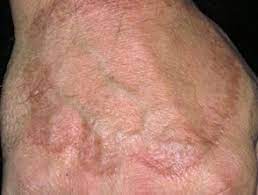
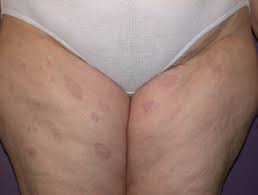
- Localized form (most common): Single or multiple rings – smooth, slightly raised papules connected into plaques, usually on the hands, feet, ankles, wrists. The center is a calmer color, and the edges are more defined. It may be completely asymptomatic.
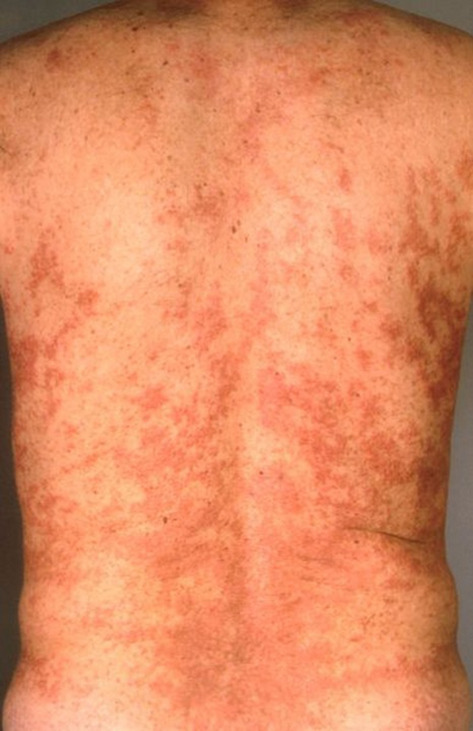
- Generalized form: The rash spreads across the trunk, arms, and legs, with potentially hundreds of small papules, sometimes accompanied by mild itching. This form tends to be more prolonged.
- Rare forms: Perforating (with small surface openings), subcutaneous (more common in children – deeper, firmer nodules).
Changes in pigmentation or scarring after granuloma annulare are uncommon unless the skin is aggressively traumatized or inappropriate self-treatment methods are used.
When to See a Doctor?
- If a ring-shaped rash appears with an unclear origin, or it spreads, changes, or if pain, oozing, or cracks develop.
- If the rash spreads over a larger body area or persists for more than a few months and is aesthetically bothersome.
- If you have associated conditions (e.g., diabetes, thyroid disorders) or a family history of autoimmune diseases.
- If you are unsure whether it is a fungal infection, Lyme disease, or another condition requiring specific treatment.
Timely consultation with a dermatologist can accurately distinguish granuloma annulare from other ring-shaped rashes and prevent unnecessary or inappropriate treatment.
Diagnosis
An experienced dermatologist can often make a diagnosis clinically – based on the typical appearance and distribution of the rash. In cases of atypical presentation or doubt, additional tests may be performed:
- Dermoscopy: A non-invasive skin examination that helps assess structure and rule out other diseases.
- Skin biopsy: A small tissue sample confirms the granulomatous structure and excludes other diagnoses (e.g., necrobiosis lipoidica, sarcoidosis, lichen planus, erythema annulare centrifugum, tinea corporis).
- General health assessments: In cases of widespread or recurrent presentation, the doctor may recommend general blood tests and other evaluations to assess possible associated conditions based on the clinical situation.
Differential diagnosis with fungal infections, Lyme disease, lichen planus, or psoriasis forms is important as these conditions are treated differently.
Our iDerma clinic dermatologists help accurately diagnose, assess the extent of the rash, and develop an individualized treatment and care plan. Consultations are available both in-person at the clinic and remotely, when medically appropriate.
ARTICLE_GIF
Treatment
Granuloma annulare often resolves spontaneously – especially the localized form, which may regress without consequences within 6–24 months. Treatment is prescribed when the rashes are aesthetically or functionally bothersome, spreading, or persistent. Possible measures include:
- Observation and skin care: Proper moisturizing, gentle cleansers, sun protection, and avoiding mechanical irritants (friction, scratches). This is especially suitable for children and small, asymptomatic plaques.
- Topical anti-inflammatory measures: Dermatologist-prescribed treatments applied to limited areas; sometimes occlusion is used to enhance the effect.
- Procedural methods: Cryotherapy for individual papules, laser procedures in selected cases, injectable procedures in small spots. These measures can reduce elevations and accelerate regression.
- Light therapy: Phototherapy methods (dermatologist-selected wavelength and protocol) can be effective in widespread or resistant cases.
- Systemic strategies: In some very widespread or long-lasting cases, more complex treatment regimens are applied and monitored by a specialist, assessing the benefit-risk ratio.
The goal of treatment is to reduce the rash, shorten its duration, and improve skin appearance, preserving its integrity and avoiding scarring. In all cases, realistic expectations are important: even after successful treatment, rashes may recur in other areas or over time.
If considering treatment, we recommend consulting – iDerma dermatologists will assess the form, activity, and offer an individualized, safe strategy. Depending on the situation, consultations are available both in-person and remotely.
Care and Prevention
- Gentle daily care: Avoid harsh scrubs and rough sponges, use gentle cleansers and moisturizers to maintain the skin barrier.
- Sun protection: Moderate sun exposure, protective clothing, and seeking shade at midday; this helps reduce triggering effects in sensitive individuals.
- Avoid irritants: Avoid friction, scratches, repeated microtraumas (e.g., pressure from tools or sports equipment on specific areas).
- Overall health maintenance: Balanced diet, physical activity, stress management; if recommended by a doctor – care for associated conditions (e.g., glucose, thyroid).
- Avoid self-treatment: Avoid self-burning, intense cooling, or otherwise traumatizing the skin – this can lead to pigmentation changes or scarring.
While there is no guaranteed prevention, proper skin care and regular contact with a dermatologist help manage symptoms and reduce the impact of recurrences on quality of life.
Frequently Asked Questions
- Is granuloma annulare contagious? – No. It is a non-contagious, immune system-driven skin condition, not transmitted through contact or the environment.
- Can it be mistaken for "ringworm"? – Yes, the ring-shaped rash resembles dermatophytosis. Therefore, self-treating for fungus should be avoided – a dermatologist's examination or tests help prevent mistakes.
- Will the rashes resolve on their own and will there be scars? – The localized form often resolves on its own within 6–24 months, and scars are uncommon. Scarring may occur only after aggressive traumatic methods or scratching.
- Does the sun worsen granuloma annulare? – For some people, intense sun exposure can trigger or accentuate rashes. Reasonable sun safety measures are recommended.
- Are general blood tests necessary? – Usually not, if the course is typical and limited. In cases of widespread, prolonged, or recurrent presentation, the doctor may recommend broader tests based on the individual situation.
- Can I exercise and swim in a pool? – Yes. Since the condition is not contagious, sports and swimming are possible. It is important to avoid friction and to moisturize the skin well after swimming.
Conclusions
Granuloma annulare is typically a benign, self-limiting skin condition that more often poses an aesthetic rather than a medical concern. Accurate diagnosis and a calm, individualized approach help avoid unnecessary treatment and choose the safest path when interventions are needed. If you notice ring-shaped rashes or are unsure of the diagnosis, it is worth consulting a dermatologist – this will help quickly and accurately decide on the next steps and ensure healthy skin care.